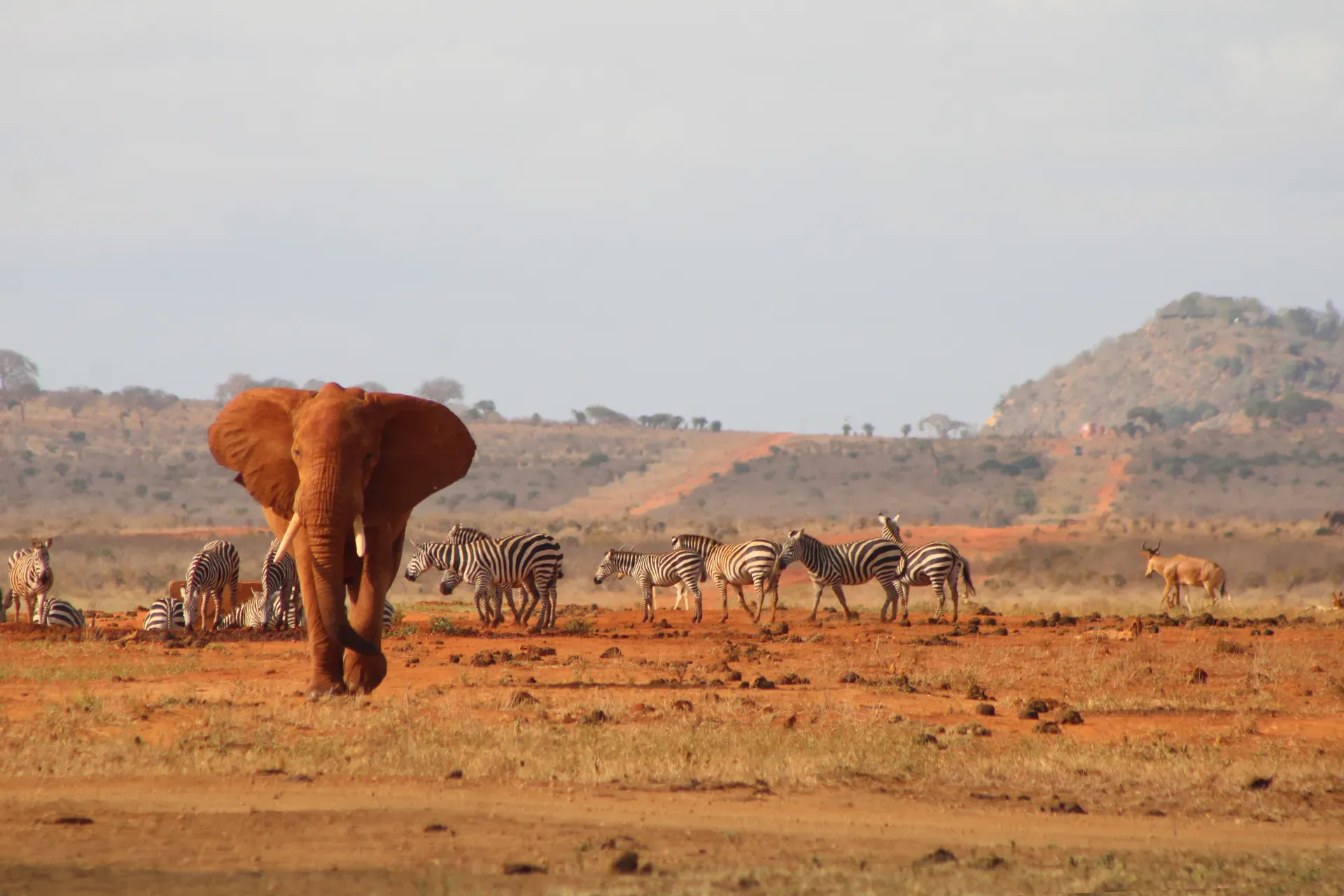
Same wilderness, two very different safaris. Tsavo East and Tsavo West form a single protected block of roughly 22,000 km² — about 4 percent of Kenya's land surface — split down the middle by the Nairobi–Mombasa highway and the railway beside it. East of that line: flat, dry, open plains where animals are easy to find. West of it: volcanic hills, springs and thick bush where the scenery competes with the game.
The name rings a bell for a reason. In 1898 two maneless lions killed around 35 railway workers here during construction of the Uganda Railway — the "Man-Eaters of Tsavo" story behind The Ghost and the Darkness. Both parks were gazetted in 1948 and both are run by the Kenya Wildlife Service. Here's how to pick between them, or decide you want both.
Tsavo East vs Tsavo West at a Glance
Pick Tsavo East for the classic safari: open savannah, big herds, easy sightings. Pick Tsavo West for drama — volcanic hills, crystal springs, and rhinos. That's the whole decision in two sentences; the rest of this guide works out which one fits your dates, your budget and your starting point.
| Tsavo East | Tsavo West | |
|---|---|---|
| Size | 13,747 km² (Kenya's largest park) | 9,065 km² |
| Terrain | Flat, arid red-soil plains | Volcanic hills, black lava, woodland |
| Star wildlife | Red elephants, big herds, lion, cheetah | Black rhino, leopard, lesser kudu |
| Signature sights | Galana River, Yatta Plateau, Mudanda Rock, Aruba Dam | Mzima Springs, Shetani Lava Flow, Chyulu Hills |
| Closest gate | Voi, 156 km from Mombasa | Mtito Andei, ~240 km from Nairobi |
| Best trip length | 2 days | 3+ days |
The split is administrative, not ecological. Together the two parks and the adjoining Chyulu Hills form the Tsavo Conservation Area — roughly the size of Wales and one of the largest protected areas in the world. Animals don't read the boundary signs, but your park ticket does, which matters later when we get to fees.
Landscape and Scenery: Open Plains vs Volcanic Hills
Scenery is where the two parks diverge most sharply, and it's often the deciding factor for photographers. One is a postcard of endless red savannah; the other looks freshly volcanic, green and crumpled. Both are beautiful. They don't resemble each other at all.
Tsavo East: red plains and the Yatta Plateau
Flat, red and dry — that's Tsavo East, built on the former Taru Desert. The Galana River cuts emerald water through arid scrub, and its palm-lined banks are where the game gathers. Along the park's western edge runs the Yatta Plateau, a fossilized lava ridge about 290 km long that KWS describes as the world's longest lava flow; driving beneath its edge gives you the park's sense of scale in one view.
The scenic stops cluster in the south. Lugard's Falls squeezes the Galana through polished rock channels in a chain of rapids that attract crocodiles and river birds. Mudanda Rock, a 1.6 km inselberg, catches rainfall and feeds a dam at its base — climb it and you look straight down at elephants drinking below. Aruba Dam completes the set.
Tsavo West: lava, springs and Kilimanjaro
Tsavo West could pass for a different country. Black lava spreads over roughly 50 km² at the Shetani Lava Flow, spilling from the young volcanic cones of the Chyulu Hills, with Chaimu Crater close by. The hills are green where East is red, and on clear mornings Mount Kilimanjaro rises over the horizon to the south.
Mzima Springs is the headline. About 250 million litres of crystal-clear water a day well up here, filtered through the Chyulu Hills' volcanic rock on its way to supplying Mombasa — and a submerged viewing chamber lets you watch hippos and fish through the glass. It's the single most distinctive sight in either park.
On scenery alone, West wins: more varied, greener, more dramatic. East wins on scale — big skies and the classic safari-postcard plain. If landscape is the reason you're going, go West.
Wildlife and Game Viewing: Where Are Sightings Easier?
This is the question most searchers actually care about, and the answer is terrain-driven: East's open plains produce easier sightings and bigger herds, while West's denser bush demands more effort but adds species East simply can't offer. Rhinos are the headline difference.
Tsavo East: easy sightings and red elephants
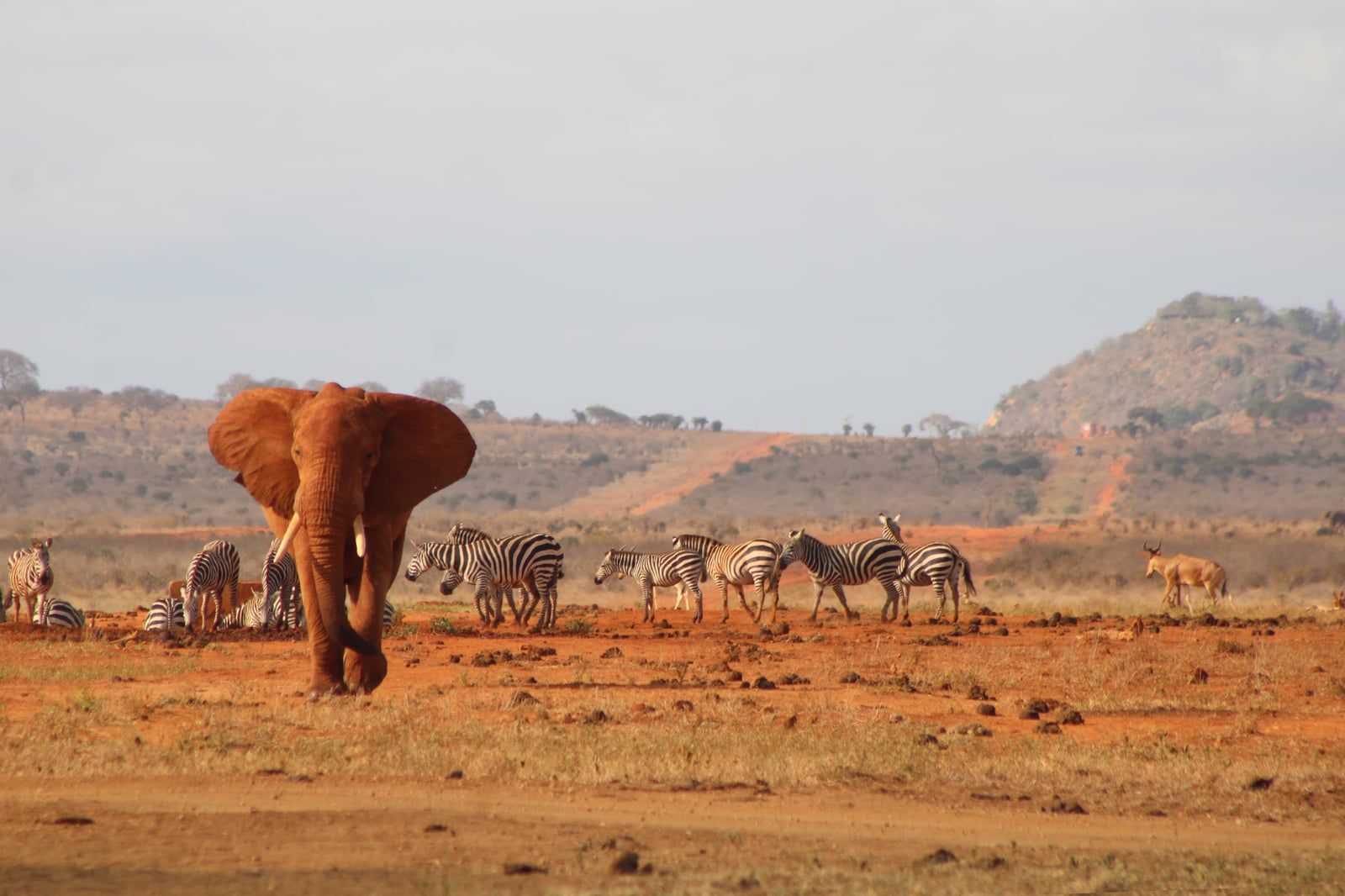
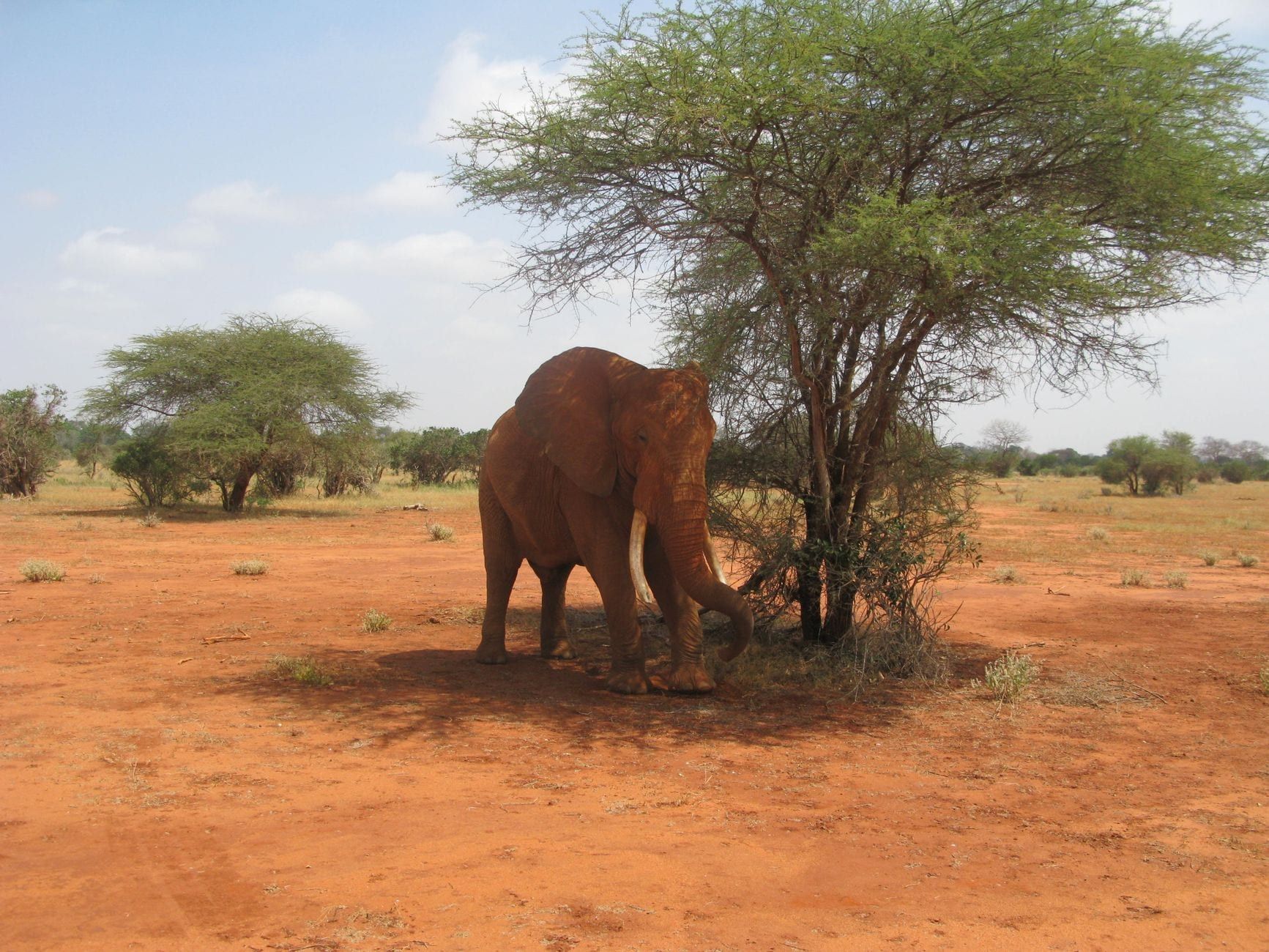
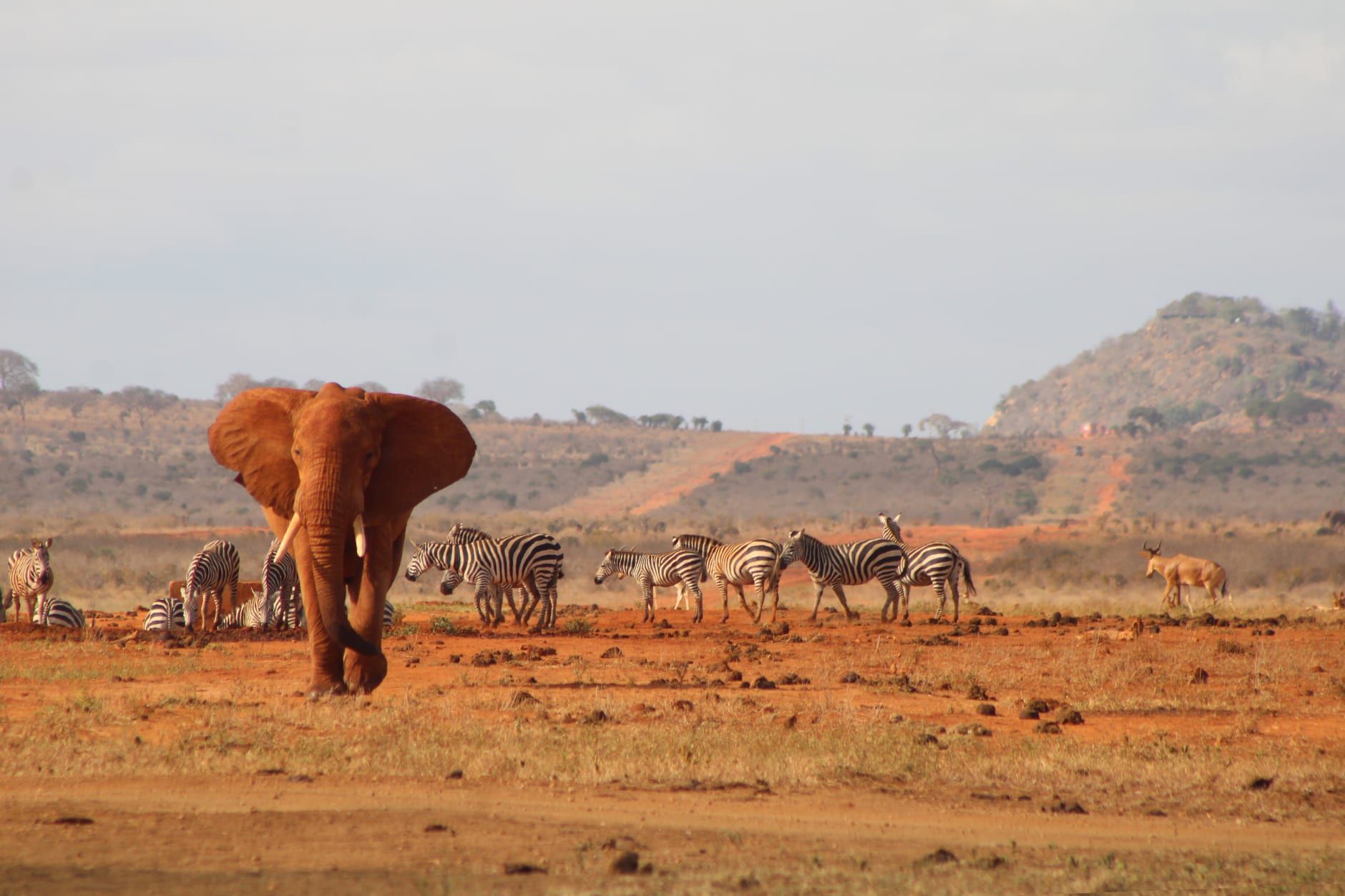
Sightings are easier in Tsavo East, and the terrain explains why. On flat, arid plains a lion in the grass two hundred metres off is still visible; the same lion in West's bush is invisible at fifty. Herds of over 100 elephants gather at Mudanda Dam in the dry season, and the dust they throw over their backs is why Tsavo's elephants look rust-red — ochre soil on grey skin, not a separate species. Lion, buffalo and cheetah hunting the open plains round out the cast; our guide to Tsavo East's animals covers the rest. The consensus on TripAdvisor's Kenya forum agrees with the pattern: East delivers more animals per hour.
Tsavo West: rhinos and the species East can't offer
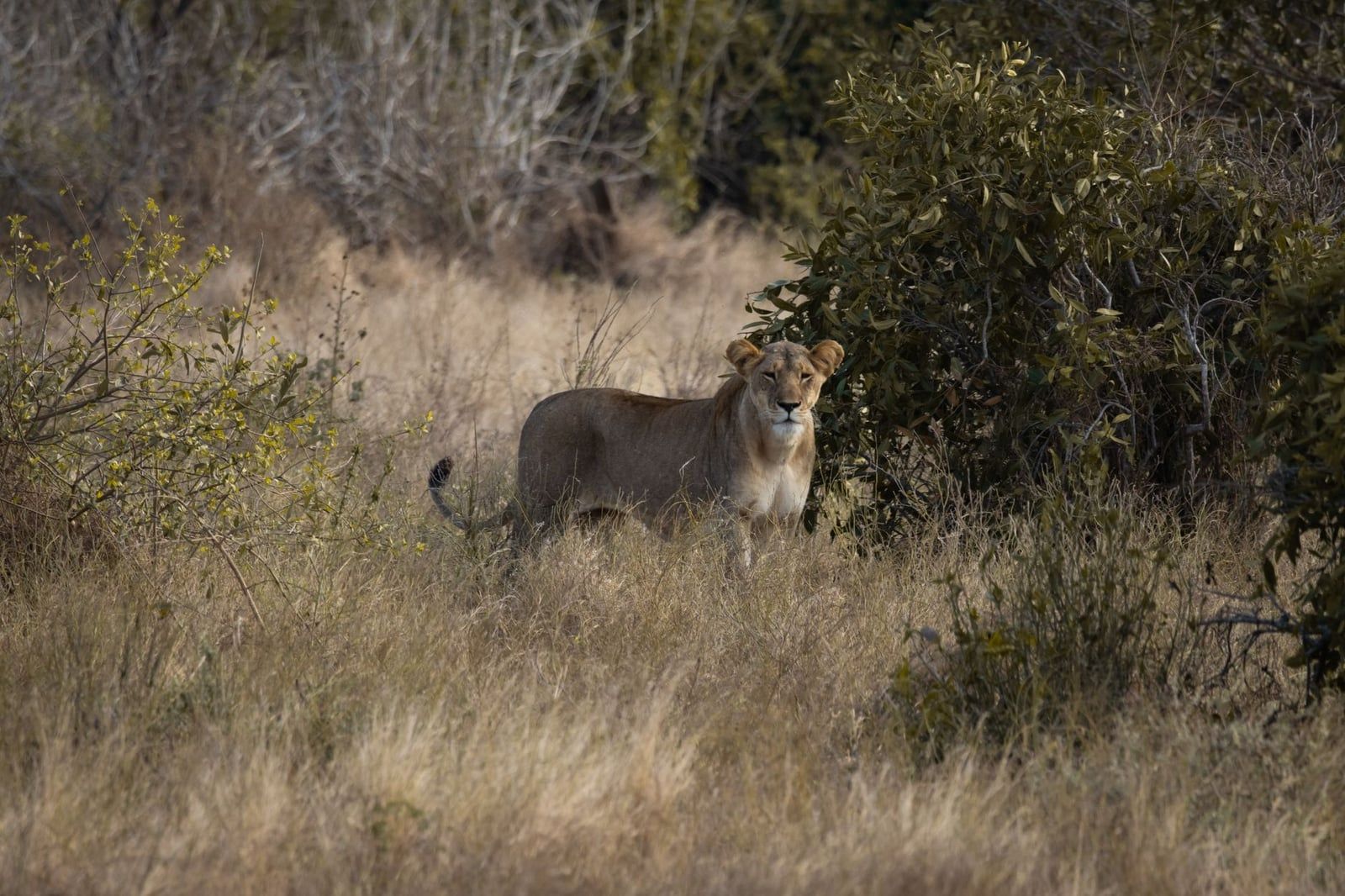
Rhinos are the direct answer to the most common question: no, you won't see one in Tsavo East. Black rhinos are confined to the roughly 90 km² Ngulia Rhino Sanctuary in Tsavo West, the only reliable rhino viewing between the two parks. West also adds lesser kudu, better leopard odds in the dense cover, and dependable hippos and crocodiles at Mzima. The trade is effort — you work harder for every sighting in thick bush, and some travelers come back from West reporting spottier game than they hoped.
For birds, call it a tie with an asterisk. More than 500 species are recorded across the two parks, and migratory birds swell the lists from November to April. The asterisk is Ngulia: every November and December, vast migratory flocks funnel through Tsavo West's hills — a spectacle birders plan whole trips around.
The Safari Experience: Game Drives, Crowds and Atmosphere
A day in Tsavo East runs simple. Drives last four to six hours on straightforward tracks, the classic loop running Voi Gate to Mudanda Rock to Aruba Dam, and navigation is easy enough that self-drivers manage it. You'll pass more elephants than vehicles.
Tsavo West asks for more. Five to seven hours is typical, on winding routes where the payoff hides around corners — the standard run links Mzima Springs, the Ngulia Rhino Sanctuary and the Chyulu Hills. Tracks are rougher, and a proper 4WD isn't optional.
Now the crowding nobody else tells you about. The Nairobi–Mombasa highway slices through the ecosystem, and its proximity feeds day-trippers from the coast toward Tsavo East's Voi side — around Aruba Dam on a weekend you'll share sightings. West, harder to reach and denser, sees fewer vehicles and feels more secluded. Head deeper into East, toward the Galana, and you can drive three hours without meeting another car, so the choice is really between convenience and solitude.
Two West extras deserve billing. Several lodges there — Kilaguni Serena is the best known — overlook floodlit waterholes, so the game viewing continues after dark, over dinner. And the guided walk at Mzima Springs takes one to two hours along the hippo pools before ending at the underwater chamber. It's the one fixed activity in either park worth planning a day around.
Getting There: Which Park Is Closer to Mombasa, Diani and Nairobi?
From the coast, Tsavo East is the closer park, and it isn't close. Bachuma Gate sits 110 km from Mombasa — about 2.5 to 3 hours by road — and Voi Gate 156 km; travelers from Malindi enter at Sala on the C103. From Nairobi, Mtito Andei Gate is 233 km south, a four-to-five-hour drive.
Tsavo West's access points: Tsavo Gate near Manyani, 191 km from Mombasa, and Chyulu Gate if you're coming down from Amboseli. From Nairobi, the same Mtito Andei junction serves the park at roughly 240 km out. So West is the natural fit for Nairobi itineraries and Amboseli combinations, East for the coast.
The train splits the difference nicely. The SGR Madaraka Express stops at Voi and Mtito Andei (Miasenyi also serves East) about four hours from Nairobi, from KES 1,050 one way in economy — lodges arrange station pickups taking 30 to 60 minutes. Charter flights from Nairobi Wilson cut the journey to roughly 45–60 minutes, landing at airstrips including Voi, Aruba and Satao.
The rule of thumb is simple. Beach week in Mombasa or Diani means East — safaris from Mombasa and trips from Diani almost all enter at Bachuma or Voi. A Nairobi start, or a plan that pairs Tsavo with Amboseli, points you West.
Best Time to Visit Tsavo East and Tsavo West
June to October and January to February are the months. It's dry, the vegetation thins, and in both parks animals crowd the remaining water — the Galana and Aruba Dam in East, Mzima and the lodge waterholes in West. July through October is the sweet spot, and both parks run far quieter than the Maasai Mara at the same time of year.
The short rains in November and December split the difference. Fresh grass scatters the game, but birding peaks as migrants arrive — the November–December flocks at Ngulia are a spectacle in themselves — and visitor numbers drop. The long rains of March to May, with April the wettest month, turn tracks to mud and make some roads impassable. Prices soften and the bush turns green; go then only if you value scenery and solitude over sighting counts.
Both parks run hot: about 31°C by day and 20°C at night in East, and around 29°C down to 18°C in West's hills. The number that surprises people is the dawn drive — 18°C at 6 a.m. in an open vehicle is genuinely cold. Pack a fleece even on the equator.
Costs and Where to Stay: Park Fees, Lodges and Value for Money
Entry costs the same in both parks, so fees don't break the tie — but they do punish doing both. Under the KWS tariff effective 1 October 2025, the first revision since 2007, a ticket buys 24 hours in one park, and a Tsavo East ticket does not cover Tsavo West. Vehicle entry is billed separately (KES 600 a day for a small car), and you pay by card or M-Pesa at the gate or in advance on KWSPay. Full details are on our hours and fees page.
| Visitor category | Adult | Child (3–17) |
|---|---|---|
| Non-resident | USD 80 | USD 40 |
| African citizen (non-EAC) | USD 40 | USD 20 |
| Kenya resident | KES 1,350 | KES 675 |
| East African citizen | KES 1,000 | KES 500 |
In East, Satao Camp sits around a busy waterhole from about USD 340 per person per night, and Galdessa Camp on the Galana River starts around USD 620. Budget travelers are covered too: Ashnil Aruba and Sentrim Tsavo keep prices down without leaving the park — our guide to Tsavo East lodges has the full range.
West's ladder climbs higher. Kilaguni Serena, with its floodlit waterhole, runs from about USD 300, Severin Safari Camp from about USD 320, and Finch Hattons — the luxury camp — from about USD 690 per person per night.
Both parks undercut Mara-style pricing, and Tsavo generally is the move for travelers avoiding Masai Mara congestion on a budget. West's luxury tier runs noticeably higher; East gives budget travelers more options.
So, Which Should You Choose? A Decision Guide by Traveler Type
Everything above folds into a short decision tree: how many days you have, where you start, and whether this is your first safari. The conditions below do the choosing for you.
Choose Tsavo East if
- It's your first safari — open plains make sightings easy.
- You have two days or fewer, starting from the coast.
- Big elephant herds are the priority.
- You're watching the budget.
Most first-timers from the coast land here, and two-day Tsavo East safaris from Mombasa or Diani are the standard shape: one night, morning and afternoon drives around Aruba Dam.
Choose Tsavo West if
- You've safaried before and want variety.
- Scenery and photography drive the trip.
- Rhinos and Mzima Springs are on the list.
- You have three or more days, or start from Nairobi.
Three days is the comfortable minimum. West's drives run longer, its tracks are slower, and rushing it wastes the park's best qualities.
Do both if you have three or four days
The classic combined circuit spends the first night in East — game drives around Aruba Dam and Mudanda Rock — then crosses to West for Mzima Springs, the Ngulia Rhino Sanctuary and the Shetani Lava Flow. Combined East and West tours handle the transfers; just remember you'll pay park entry twice. For routing ideas, compare those with the three-day safari itineraries.
Extending the trip
Two pairings dominate. From West, continue to Amboseli for big tuskers beneath Mount Kilimanjaro — the Chyulu Gate road connects them directly. Or bolt a beach week onto either park: Diani's white sand sits about three hours from Tsavo East's gates, the classic bush-and-beach finish.
The final call: East for wildlife simplicity — the park that shows you the most animals with the least effort, ideal for a first safari or a coast add-on. West for scenery, rhinos and a wilder, quieter feel. If you have four days, stop choosing: the two parks sit a few hours apart, cost the same to enter, and are better together than either is alone.
Frequently asked questions
Which is better for a first safari: Tsavo East or Tsavo West?
Tsavo East. Its flat, open plains make animals easy to spot, with large red-elephant herds and good odds on lion and cheetah — the classic savannah experience with the least effort. West is the better second safari, once you know you love the bush enough to work for it.
Can you see rhinos in Tsavo East?
No. Black rhinos are confined to the roughly 90 km² Ngulia Rhino Sanctuary in Tsavo West. Tsavo East has no resident rhino viewing, so if rhinos are a priority, West is the only choice of the two.
Can you visit Tsavo East and Tsavo West in the same trip?
Yes — combined itineraries are the classic three-to-four-day Tsavo route, usually East first (Aruba Dam, Mudanda Rock) then West (Mzima Springs, Ngulia, Shetani). Remember that KWS entry is charged per park, so visiting both means paying twice.
How many days do you need for a Tsavo safari?
Two days is enough for Tsavo East from the Mombasa or Diani coast — one night with morning and afternoon drives. Three to four days lets you do both parks at a relaxed pace, and Tsavo West really needs three days to itself to feel worth it.
Which park is closer to Mombasa and Diani Beach?
Tsavo East. Bachuma Gate is 110 km from Mombasa (about 2.5–3 hours by road) and Voi Gate 156 km. Tsavo West is reachable from the coast too — Tsavo Gate near Manyani is 191 km — but it usually adds transfer time.
Why are Tsavo's elephants red?
They bathe and wallow in the park's fine red ochre soil, which stains their grey skin rust-coloured. It's dust, not genetics — the same species as any African elephant, just better dressed for the terrain.
Which park has better wildlife viewing?
Generally Tsavo East. Its open, arid terrain makes spotting far easier, and forums reflect that consensus. Tsavo West's denser bush demands more patience but rewards you with rhinos, leopards and the hippos of Mzima Springs.
Is Tsavo West worth visiting?
Yes — for scenery lovers and photographers it's arguably the more beautiful park: Mzima Springs, the Shetani Lava Flow, volcanic hills and Kilimanjaro views, plus the rhino sanctuary. Expect spottier game than in East and give it at least three days so the sightings have room to come good.