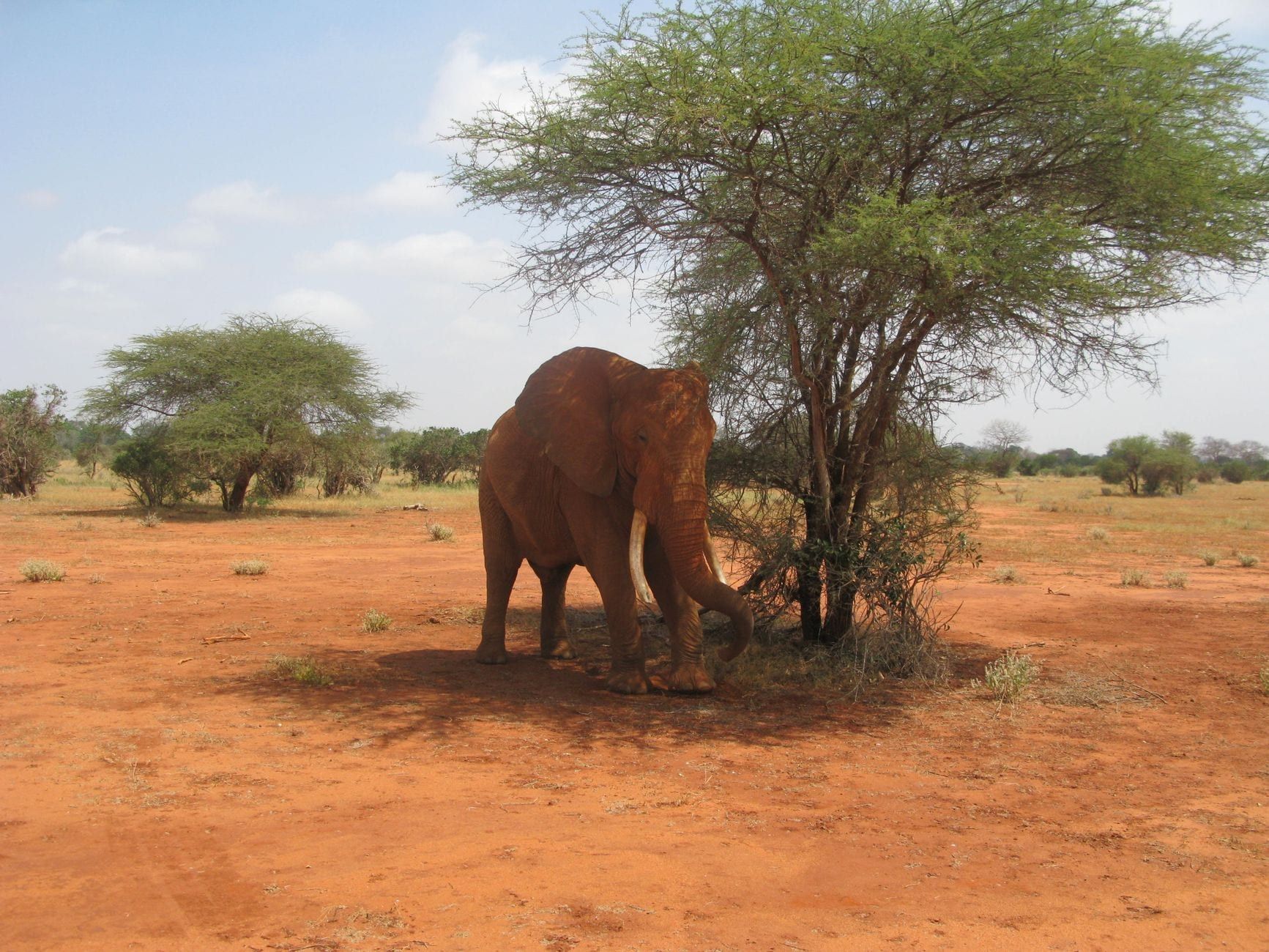
Kenya's largest national park, and one of the wildest you can drive into from a beach towel. Tsavo East covers 13,747 km² of semi-arid plains, red dust and the emerald Galana River, and it was gazetted in April 1948 as one of the country's first parks. Two hours from the coast, it's the natural bridge between a Mombasa or Diani holiday and the safari circuit — and the fastest way to trade a sunbed for lions.
Why Choose Tsavo East for a Safari
That size is the whole point. Together with its sister park, Tsavo East forms the roughly 22,000 km² Tsavo Conservation Area — the largest protected wildlife area in Kenya — and one of Africa's most important elephant strongholds. On the ground it reads as space: you can drive three hours across the southern plains without passing another vehicle, which the Maasai Mara simply cannot offer in high season.
Honest trade-offs first. Wildlife is more dispersed here than in compact reserves like the Mara, so sightings reward patience and binoculars rather than delivering constant action. It's also hot — around 31°C by day, 20°C at night — for much of the year, and the dry-season sky carries dust haze that softens your photographs. What you get in exchange is a crowd-free, genuinely remote wilderness an easy drive from the coast.
That makes it the right park for three kinds of traveller: anyone adding a 1–3 day safari onto a Mombasa or Diani beach stay, repeat Kenya visitors who've already done the Mara, and anyone who wants big wilderness over guaranteed sighting density. If your heart is set on the Great Migration river crossings, book the Mara instead. For everything else on a Kenya itinerary, start with our Tsavo East safari tours and read on.
Wildlife: Red Elephants, Maneless Lions & the Big Five Reality
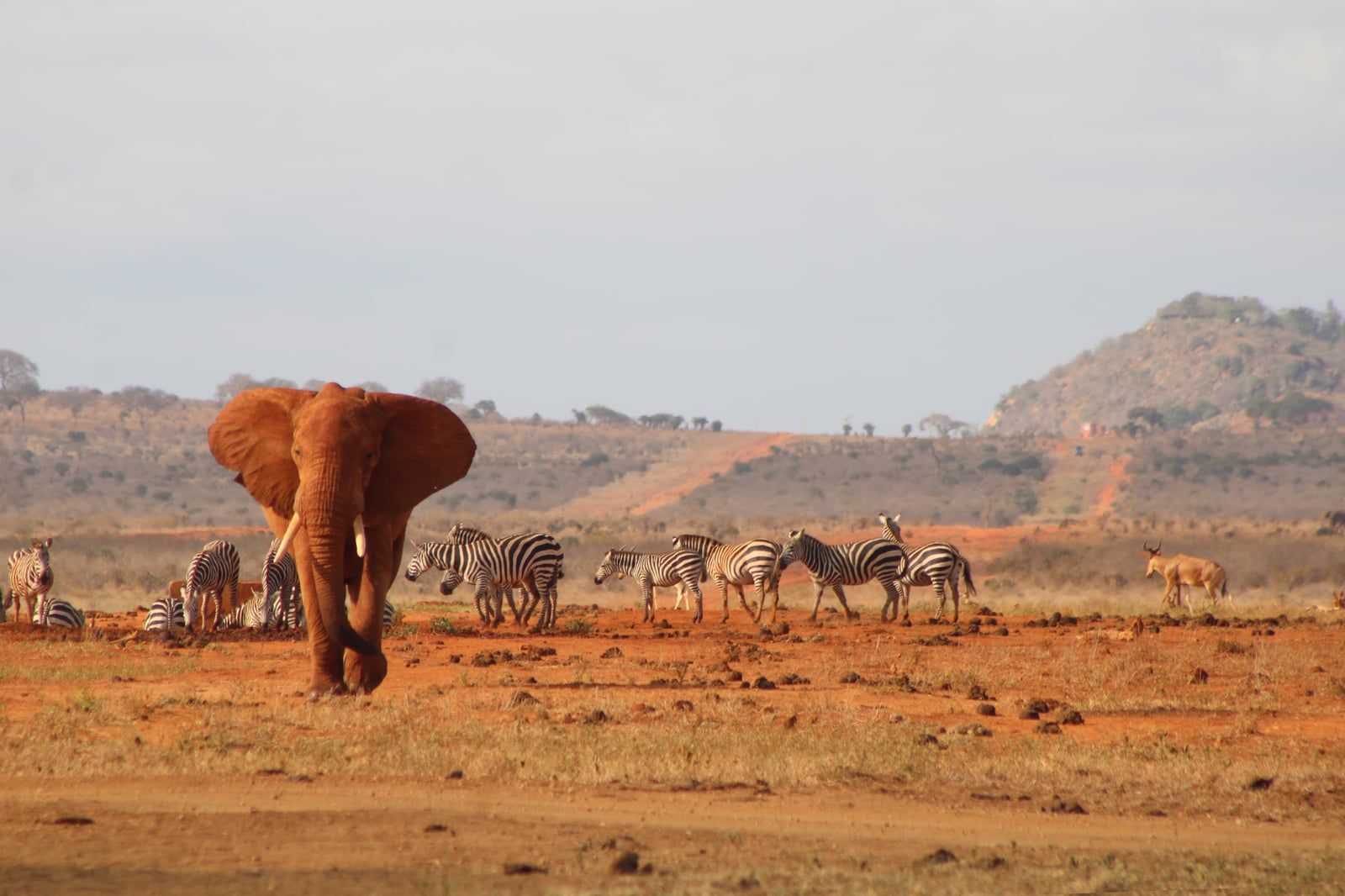
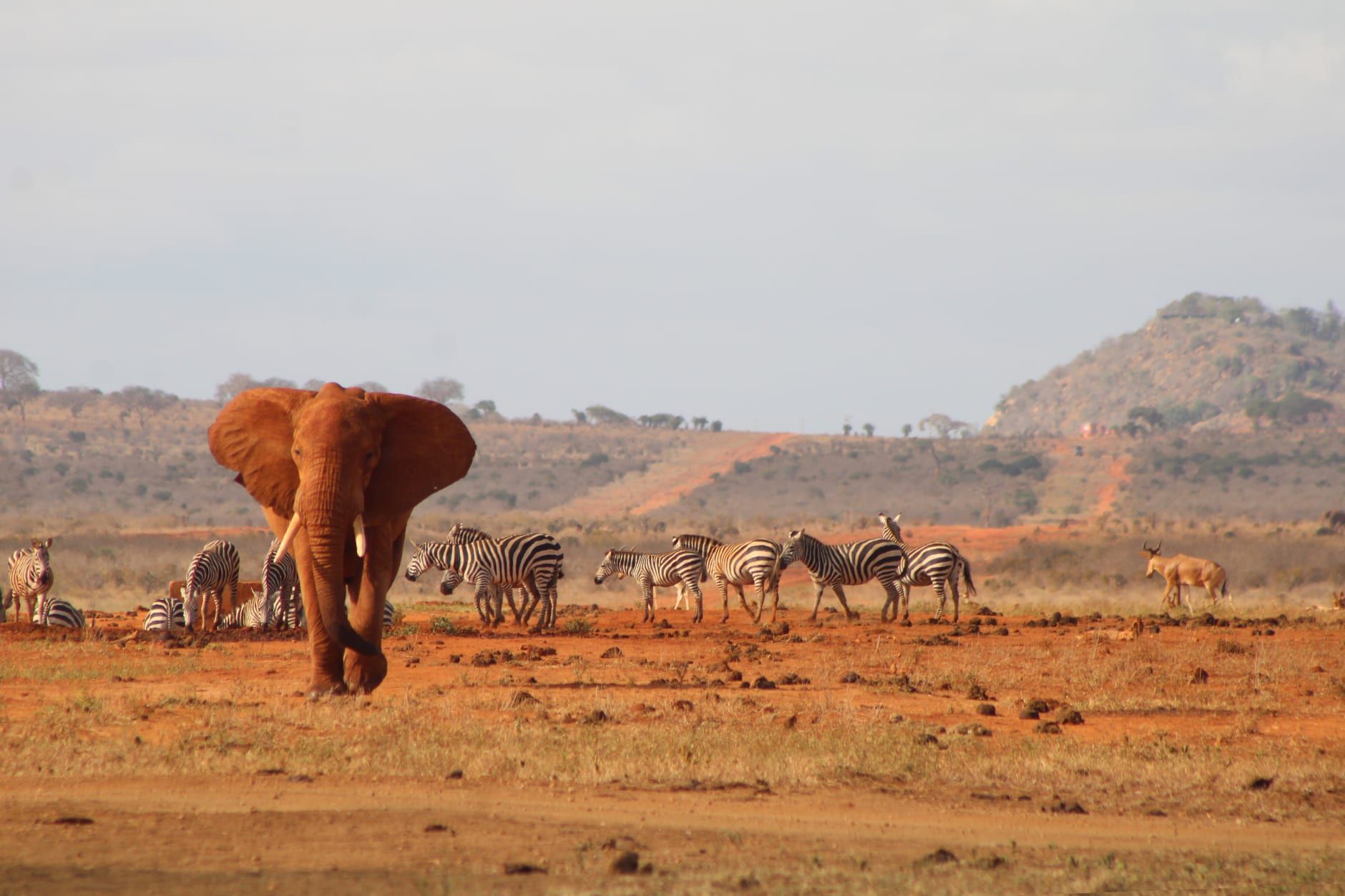
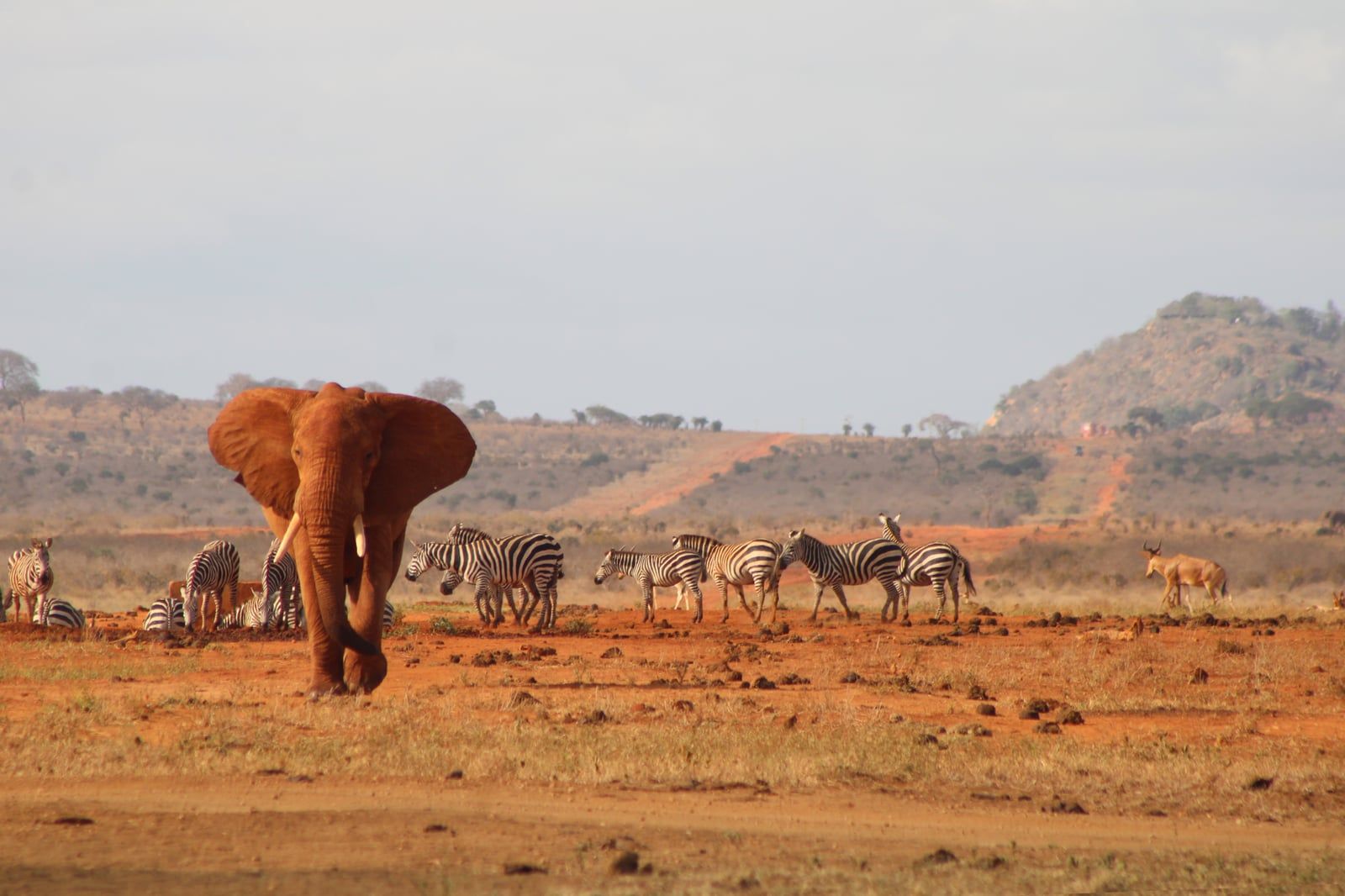
Start with the park's signature: herds of elephants turned rust-red by dust-bathing in Tsavo's iron-rich soil. They're grey animals underneath — the coating is cosmetic and they repaint themselves daily. The greater Tsavo ecosystem holds an estimated 12,500 elephants, one of the largest populations anywhere, so while the park is vast, big family groups are a realistic sight, especially where water is. Aruba Dam and the Galana River are the classic spots; there herds come to drink, wallow and cross in numbers that make the long, quiet drives worthwhile.
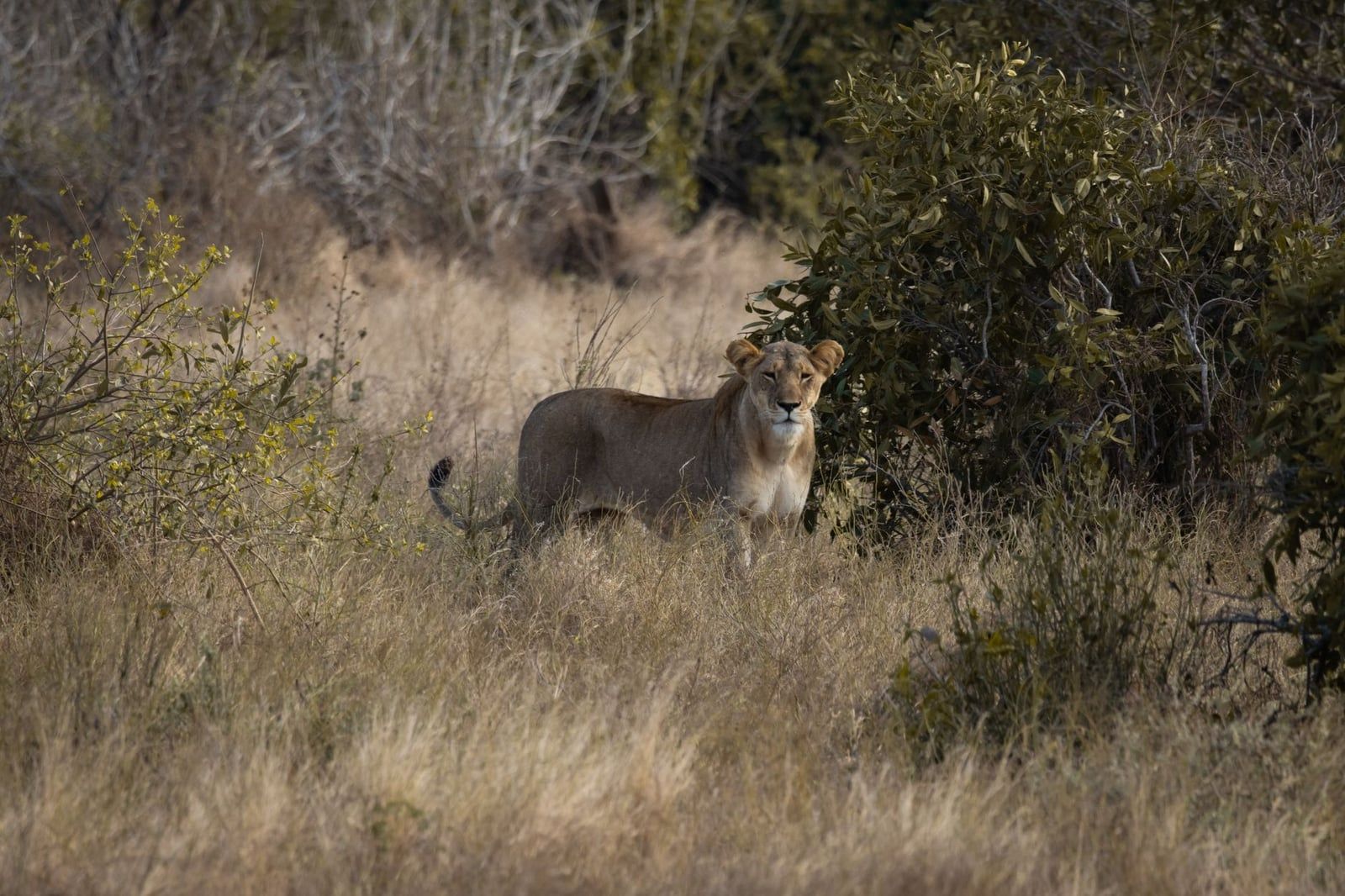
The lions have a look of their own. Tsavo's adult males characteristically lack the heavy mane you'd expect — an adaptation linked to the hot, thorny bush — and the Amboseli–Tsavo ecosystem holds around 675 of them. The lineage is notorious: in 1898 two maneless males killed dozens of Uganda Railway workers near the park before Lieutenant-Colonel John Henry Patterson shot them. Early accounts blamed around 130 victims; later research puts the number nearer 35. Either way, the "Man-Eaters of Tsavo" made this stretch of railway famous, and the mounted pair has been at Chicago's Field Museum since 1925.
On the Big Five, be honest with yourself: lion, leopard, buffalo and elephant are realistic targets, and rhino is not. Reliable rhino sightings belong to the Ngulia Rhino Sanctuary, which sits across the highway in Tsavo West — anyone selling you a Big Five guarantee in Tsavo East is overselling. See our guide to Tsavo East's animals for the full species picture.
What Tsavo East has that the Mara doesn't is a set of dry-country specials. Look for gerenuk standing on their hind legs to browse acacia, lesser kudu, Beisa oryx, the Somali ostrich and the critically endangered hirola antelope — a species you'll struggle to find anywhere else on a standard safari. Cheetah work the open plains either side of Aruba Dam, giraffe and zebra are common, and the Galana's banks hold hippo and crocodile. Wild dogs pass through occasionally; count that as a bonus, never a plan.
Birders get more than a consolation prize: over 500 recorded species, from vulturine guineafowl and dry-scrub bustards, coursers and hornbills to kingfishers, herons and raptors along the river. October to January, when Palearctic migrants arrive, is the strongest window.
Landmarks & Scenery: Lugard Falls, Mudanda Rock, Aruba Dam & the Yatta Plateau
The park's named landmarks double as its best game-viewing beats — learn them and you can read any Tsavo East itinerary at a glance. Most sit in the southern sector, reachable from the Bachuma and Voi gates on a day trip.
The Galana River
The Tsavo and Athi rivers join inside the park to form the Galana, and its emerald ribbon is the lifeline that concentrates wildlife when everything else dries out. In the dry season it's the reason the animals are where they are; driving its banks combines scenery with your best odds of hippo, crocodile and the big herds coming down to drink.
Lugard Falls
Not a true waterfall — the Galana funnels through polished ancient rock in a series of rapids and sculpted channels, water-carved into grooves and potholes you can walk among. It's the park's most dramatic scenic stop, and the pools draw crocodiles and birdlife. Pair it with a slow drive along the river for hippo.
Mudanda Rock
A whale-shaped inselberg about 1.6 km long that acts as a natural water catchment, feeding a dam at its base. Elephants, zebra and antelope come to that water, and the rock itself is the viewing platform — climb it and you look straight down on the procession. Photography from the top is the classic Tsavo East shot.
Aruba Dam
Built on the Voi River, the dam is a permanent wildlife magnet when the seasonal pans dry up, and the open plains on either side are prime cheetah country. If you only have one afternoon from the coast, spend it here.
Kanderi Swamp
Permanent water and grazing year-round, which keeps lion and elephant in the area even in the wet months when game disperses elsewhere. A reliable stop on the Voi-side circuit.
The Yatta Plateau
The remains of the world's longest known lava flow: a fossilised ridge running over 300 km along the park's western edge above the Athi–Galana river. You drive alongside its edge rather than up it, and the scale of the thing — a wall of ancient lava with the plains spread beneath — is the best sense you'll get of Tsavo's volcanic origins.
Best Time for a Tsavo East Safari
June to October and January to February, the two dry spells, are the best months. Rain is minimal, the bush thins out, and wildlife concentrates along the Galana and around Aruba Dam, so animals are simply easier to find. Within those windows, September–October and January to early March are the peak: water sources are at their tightest and sightings at their most reliable. July through October is the stretch most guides recommend overall.
The rains matter more here than in most Kenyan parks. The long rains of March to May — April is the wettest month — can turn park tracks into quagmires and close camps; avoid April specifically if you can. November's short rains disperse water and fresh grass, spreading animals wider and making sightings harder. Both wet months also mark the malaria peaks, so factor that in.
Two qualifiers. Heat is a constant — roughly 31°C by day and 20°C at night year-round, so pack for sun even in July. And the dry-season air carries dust haze: the very months that deliver the best animals are also the softest for landscape photography. Birders get their own calendar, with October to January the strongest window for migrants. Green-season travellers trade sighting rates for lower prices and even fewer vehicles.
Safari Experiences: Game Drives, Walking Safaris & Park Rules
Game drives are the core activity, full stop. Lodges run early-morning, full-day and late-afternoon drives — the cool hours, when animals come to water — in open safari vehicles; most package operators from the coast use enclosed 4x4s with pop-up roofs. Self-drive is legal and possible, but uncommon in Kenya and demanding here: distances are long, tracks are rough, and services inside the park are minimal. A lodge-based or packaged trip is the practical choice for almost everyone.
Know the rulebook, because Tsavo East is more restrictive than some parks. Only two activities are permitted inside the park — wildlife viewing and birding — so there are no night drives, no boat trips, no balloon safaris and no self-guided hikes. Gates open at 6 am and close at 6 pm unless you're staying overnight inside the park. The speed limit is 40 km/h, off-road driving is prohibited, and you must stay in your vehicle and keep at least 20 metres from wildlife. Single-use plastics are banned in all Kenyan national parks, and drones require written KWS permission on top of KCAA authorisation — leave yours at home.
Walking is allowed, but only in company: guided walking safaris run mainly along the Galana River, led by qualified guides with an armed Kenya Wildlife Service ranger. Book through KWS or your operator — expect around USD 50 per person. It's the one way to experience the bush at ground level, reading tracks and spoor instead of rolling past them.
How to Get to Tsavo East
Your gate depends on where you start, and the park sits squarely on the Nairobi–Mombasa corridor so both cities work. Airstrips at Voi, Aruba, Satao and elsewhere serve camps directly. Full transport detail is on our getting-to-Tsavo-East page; the essentials follow.
From Mombasa or Diani (the beach add-on route). Two and a half to three hours by road on the Mombasa–Nairobi highway. Bachuma Gate is the closest at 110 km; Voi Gate is 156 km and suits camps on the Voi side. Most coast safaris enter at Bachuma and cover Aruba Dam, Kanderi and Mudanda Rock in a day. Start early — you'll want to be inside the park by mid-morning.
From Nairobi. Allow four to five hours to Mtito Andei Gate, 233 km south of the city on the Mombasa road, then more time on rough tracks to reach camps inside the park. It's an easy link if you're driving Nairobi to the coast and want a night or two of safari en route.
By train. The Madaraka Express SGR is the option most guides under-use: it stops at Voi and Miasenyi, the stations serving Tsavo East, about four hours from Nairobi (KES 1,050 economy, KES 3,200 first class) and roughly two to three hours from Mombasa. You'll need a pre-arranged transfer of 30–60 minutes from the station to your gate or lodge. Book on the official metickets.krc.co.ke portal, well in advance, and not through resellers.
By air. Charter flights from Nairobi's Wilson Airport reach the park's airstrips in about an hour; from the Mombasa coast it's 30–45 minutes. It's the quickest route and the most expensive — pick the airstrip that matches your camp (Voi and Aruba are the main ones) before you book.
Where to Stay: Lodges & Camps Inside and Around the Park
One decision shapes the trip more than the lodge itself: inside the park or at the gate. Inside, you maximise dawn and dusk game time — no gate-hours pressure, no transfer, and camps like Satao sit where the wildlife actually is. Gate-side lodges suit one-day trips and tighter budgets, because you drive in and out with the crowds. For a deeper dive, see our guide to Tsavo East lodges and camps.
The inside-the-park pick is Satao Camp, an unfenced luxury tented camp shaded by tamarind trees above a busy waterhole — elephants drink while you're at your veranda, 27 miles from Voi Gate. Also inside, Galdessa Camp sits on the Galana's banks under doum palms, with wildlife visible from the dining room; it specialises in the guided walking safaris the river is known for.
Near the gates, the practical options stack up: Voi Wildlife Lodge and Lion Hill Lodge (about a mile from Voi Gate) are built for short stays; Sentrim Tsavo sits 7.5 miles out; Ashnil Aruba sits next to Aruba Dam, 17 miles from Voi Gate, which puts game viewing on your doorstep. Ngutuni Safari Lodge, nine miles away in a neighbouring conservancy, gives a lodge-in-the-wild feel without park-gate logistics.
Budget-wise, Voi Safari Lodge is the economy end; Ashnil Aruba, Sentrim Tsavo, Voi Wildlife Lodge, Galana Crocodile Camp and Ngutuni occupy the comfortable middle; Satao is the splurge. Reserve inside-the-park camps early for the July–October and December–March high seasons.
Safari Costs: Park Fees & Package Prices
Park entry costs USD 80 per adult per 24 hours for non-resident visitors — the flat rate under the KWS tariff effective 1 October 2025. Children aged 3–17 pay USD 40; under-5s enter free. Payment is electronic only, via the KWSPay portal on eCitizen or by card/M-Pesa at the gate, so carry no cash expectation and make sure your ID matches your ticket category, because gates check. Vehicle entry is extra — KES 600 per day for a car under six seats. Gates run 6 am to 6 pm daily, and the ticket is valid for 24 hours of continuous stay rather than per calendar day, which matters when you're budgeting a two-day trip.
Note that the fee has risen recently: it was revised for the first time since 2007, and the new rate has faced legal challenge, so check the current KWS figure shortly before you travel. Guests staying at camps inside the park often have entry included in the package — always confirm what your quote covers before comparing prices.
Package prices, from real listed rates, are more manageable than most visitors expect:
| Trip format | Typical price (pp) | Notes |
|---|---|---|
| 1-day private safari from Mombasa | $200–470 | Cheapest at 6 people, most expensive solo |
| 2-day/1-night from Mombasa or Diani | $361–481 | Private, mid-range lodge; park fees included |
| 3-day Tsavo East + West combination | ≈$800 | Private, from Diani |
What moves the number: group size (a solo day trip costs more than double the per-person rate at six), vehicle type, lodge tier and season. If the quote doesn't line up with these ranges, ask what's included — park fees alone are USD 80 per person per day.
Planning Your Safari: Days, Itineraries & the Coast
Two days is the accepted minimum; two to four is the sweet spot. One day covers the headline wildlife areas — Aruba Dam, Kanderi, Mudanda Rock — as a highlights reel from the coast. Two gives a full morning-and-afternoon rhythm with a night at a waterhole camp, which is where the park changes character after the day-trippers leave. Three or four days suits photographers and anyone pushing into the quieter north. For a quick start, our 2-day Tsavo East tours and 3-day safaris are pre-built around these rhythms.
A classic 2-day coast trip runs like this: early pickup from Mombasa or Diani, enter at Bachuma or Voi, and spend the afternoon working the plains toward Aruba Dam and Kanderi Swamp. Overnight at a waterhole camp — Satao if you can, Ashnil Aruba for value. Next morning, a dawn game drive while the park is still cool and the animals are moving, then the drive back to the beach by evening. Two days, one night, no wasted hours.
East or West? Tsavo East is flat, open and dry: big red-elephant herds, the Galana, easier game viewing on sightlines that run for kilometres — the better first-timer choice. Tsavo West is rugged and volcanic, with Mzima Springs' underwater hippo hide, the Ngulia Rhino Sanctuary and the Shetani Lava Flow, but thicker cover makes spotting harder. The two sit across the Nairobi–Mombasa highway from each other and pair easily, and a 3-day combination is the standard way to do both. One warning: a Tsavo East ticket does not cover Tsavo West — buy the correct package in a single payment. The full comparison is in our Tsavo East vs Tsavo West guide.
The beach combination is Tsavo East's strongest card — it's the easiest park in Kenya to bolt onto a Mombasa or Diani stay, with safaris from Mombasa and from Diani running year-round. Nairobi travellers can chain it into Amboseli or Mara-bound routes, and anyone heading south into Tanzania can continue through to Mkomazi National Park, which shares Tsavo East's southeastern boundary. Book inside-the-park camps early for July–October and December–March; the beach resorts fill those months too.
Frequently asked questions
Can you see the Big Five in Tsavo East National Park?
Realistically four. Lion, leopard, elephant and buffalo are all regular, but rhino sightings are rare — the black rhino stronghold is the Ngulia Rhino Sanctuary in Tsavo West, across the highway. Tsavo East also adds dry-country species like gerenuk, lesser kudu and the critically endangered hirola that you won't find in the Maasai Mara.
How many days do you need for a Tsavo East safari?
Two days is the recommended minimum: one day is a highlights tour of the main wildlife areas, two gives a full safari experience with a night inside the park, and three to four suits photography and deeper exploration. A 1-day trip from Mombasa or Diani is possible because the drive is only 2–3 hours, but you'll get 4–6 hours of game driving at best.
How much does a Tsavo East safari cost?
Park entry is USD 80 per adult per 24 hours for non-residents, paid cashlessly via KWSPay. Package prices: 1-day private safaris from Mombasa run roughly $200–470 per person depending on group size, 2-day/1-night trips from Mombasa or Diani sit at $361–481, and 3-day Tsavo East + West combinations around $800. Lodge packages inside the park sometimes include entry fees — check your quote.
What is the best time of year for a Tsavo East safari?
June to October and January to February, when it's dry, the vegetation thins and animals gather at the Galana River and Aruba Dam. September–October and January to early March are the peaks. Avoid April, the wettest month, when tracks wash out and some camps close. Birders should target October–January, when migrants arrive.
How do I get to Tsavo East from Mombasa or Nairobi?
From Mombasa it's a 2–3-hour drive to the Bachuma or Voi gates, or about 2–3 hours on the Madaraka Express train to Voi or Miasenyi stations with a pre-arranged transfer. From Nairobi, allow 4–5 hours by road to Mtito Andei Gate, about 4 hours by train, or roughly an hour flying from Wilson Airport to airstrips at Voi, Aruba or Satao.
Tsavo East or Tsavo West — which should I choose?
East is flat, open and dry — famous for its red elephants, big herds and the Galana River, with easier game viewing on open sightlines. West is hillier and greener, home to Mzima Springs, the Ngulia Rhino Sanctuary and the Shetani Lava Flow. The two parks sit across the highway from each other and combine easily on a 3-day trip, but one ticket does not cover both.
Are walking safaris allowed in Tsavo East?
Yes — guided walks, mainly along the Galana River, led by qualified guides with an armed KWS ranger, at roughly USD 50 per person. There is no self-guided hiking: game viewing and birding are the only activities permitted inside the park, and walking anywhere requires ranger accompaniment.
Is Tsavo East worth it compared to the Masai Mara?
For a first safari where sightings matter most, the Mara's density wins. Tsavo East trades that density for space, wilderness and almost no other vehicles — you can drive three hours without seeing another car. Elephant viewing is excellent, wildlife is more dispersed, and sightings reward patience. Repeat Kenya visitors and beach-holiday add-ons suit it best.