About All Tours3 Days Safari Tours2 Days Safari ToursTsavo East & West ToursFrom Diani ToursFrom Mombasa Tours Directions Hours & Fees Guides
Find Tours 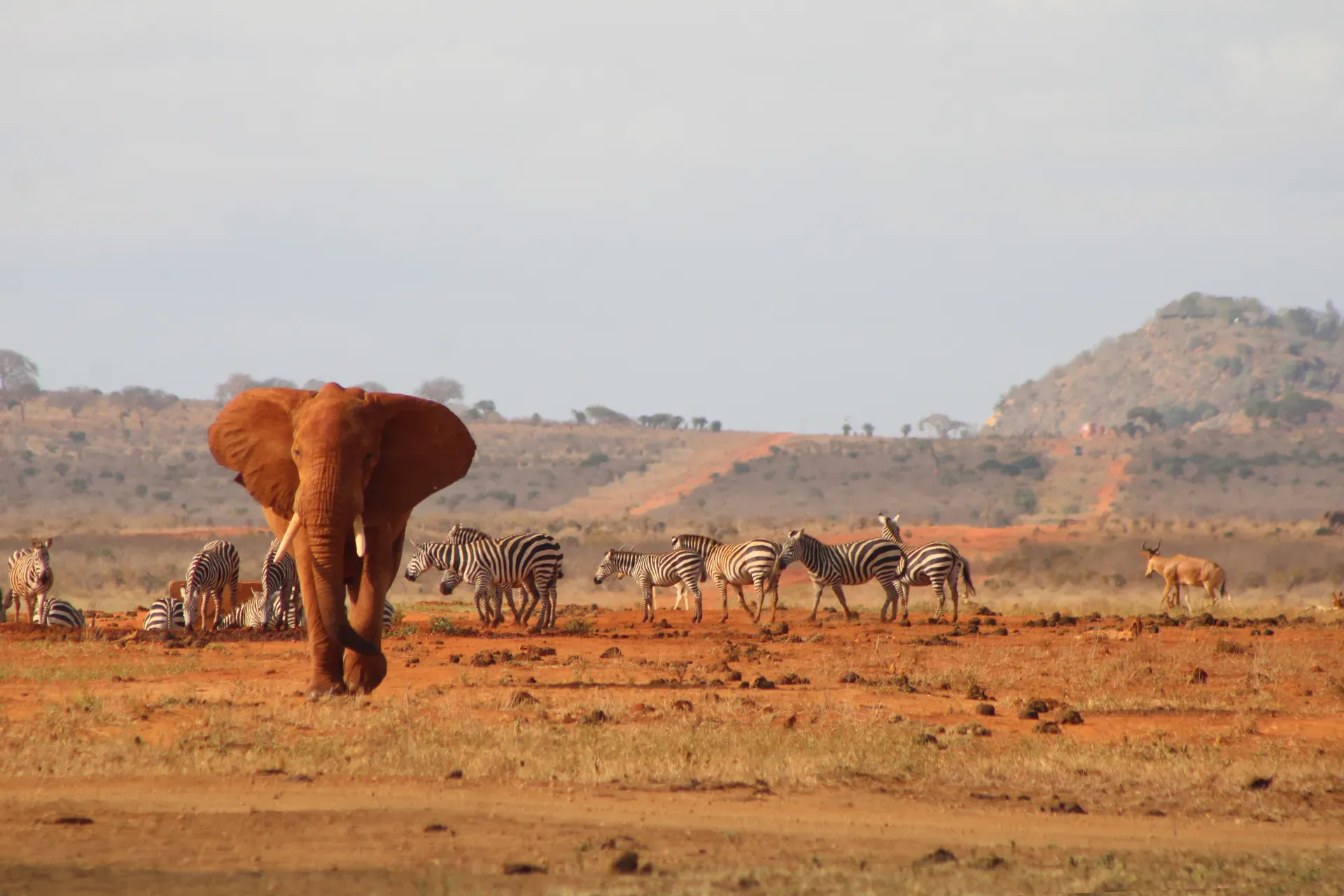
Entry to Tsavo East is paid per 24-hour stay, and the park opens its gates daily from 6:00 AM to 6:00 PM year-round. Non-resident adults pay USD 80 under the KWS tariff in force since 1 October 2025, with vehicle fees billed on top.
Tsavo East opens every day of the year: gates swing open at 6:00 AM and close at 6:00 PM sharp. There's no seasonal closure and no day off, even on Kenyan public holidays. The only exception is for guests staying overnight inside the park, who can enter and remain beyond gate hours.
One quirk to plan around: your ticket covers 24 hours of continuous stay, not a calendar day, so a mid-afternoon entry runs until mid-afternoon tomorrow.
Swipe to see more
| Day | Hours | Note |
|---|---|---|
| Monday–Sunday | 06:00–18:00 | Open year-round with no closed days. Night driving is prohibited, so plan to be at your gate or camp by 6:00 PM. Overnight guests in lodges or camps inside the park are exempt from the 6:00 PM exit rule. |
No holiday closures — the 6:00 AM to 6:00 PM schedule holds on Kenyan public holidays and through religious observances alike, since the park never shuts. The only calendar-driven disruption is weather, not dates: April's long rains can turn tracks into mud and the November short rains scatter wildlife across the plains. Aim for June–October or January–February, when dry conditions concentrate animals at the Galana River and Aruba Dam.
Entry to Tsavo East costs USD 80 per non-resident adult for a 24-hour stay, under the KWS tariff effective 1 October 2025. Children aged 3–17 pay half fare, and rates drop steeply for African citizens, Kenya residents, and East African citizens. Vehicle entry is billed separately, per day.
Swipe to see more
| Category | Price | Note |
|---|---|---|
| Non-resident adult | USD 80 | Per 24-hour stay; 2025 tariff |
| Non-resident child (3–17 years) | USD 40 | Under-5s enter free (KWSPay portal states free below age 6) |
| African citizen adult (non-EAC) | USD 40 | Proof of citizenship checked at the gate |
| Kenya resident adult | KES 1,350 | Resident ID must match ticket category |
| East African citizen adult | KES 1,000 | Citizen ID required |
| East African citizen child | KES 500 | Ages 3–17 |
| Vehicle entry (under 6 seats) | KES 600 per day | 6–12 seats: KES 1,500; 13–24 seats: KES 3,000 |
| Guided walking safari | USD 50 per person | Book through KWS or your operator |
| Commercial filming permit | USD 200 per week | Crews of 1–5 under the 2025 tariff |
| Drone permit | USD 300 per day | Requires KWS written permission plus KCAA authorisation |
No regular free entry days, though children under 5 enter free (the KWSPay portal states free entry below age 6).
Planning your visit to Tsavo East National Park? Find tours with free cancellation and skip-the-line options.
View All ToursThe best window is July to October, the long dry season: rain is scarce, the scrub thins, and elephants, lions and buffalo crowd the Galana River and Aruba Dam to drink. January and February run a close second. Even at peak season the park stays far quieter than the Maasai Mara — you can drive three hours across the plains without passing another vehicle.
Swipe to see more
| Period | Crowd Level | Recommendation |
|---|---|---|
| Early morning (06:00–09:00) | Low | Gates open at 6:00 AM sharp, and this is when wildlife is most active near water — pack a fleece, since nights average about 20°C. |
| Mid-morning (09:00–11:00) | Low | Good light for photographing dust-red elephants against the pale plains, with animals still finishing their morning drink at Aruba Dam. |
| Midday (11:00–14:00) | Moderate | Temperatures average around 31°C and sightings thin out, so this suits visitors resting at camp or doing the short walks at Mudanda Rock and Lugard's Falls. |
| Late afternoon (14:00–17:00) | Low | Activity picks up again as the heat eases — the classic slot for a river drive scanning for hippos, crocodiles and maneless lions. |
| Evening (17:00–18:00) | Low | Head for the gate by 6:00 PM unless you're staying overnight inside the park, as night driving is prohibited. |
Plan on 2 days and 1 night — the most common itinerary, giving you a morning and an afternoon game drive. Day-trippers from Mombasa or Diani squeeze in 4–6 hours of driving, enough to cover the southern circuit of Aruba Dam, Mudanda Rock and Lugard's Falls. At 13,747 km², the park rewards 3 or more days if you want the quieter northern country around Ithumba.
Skip the gate queue entirely by paying on KWSPay (kwspay.ecitizen.go.ke) with a card or M-Pesa before you leave. Make sure your ticket category — citizen, resident, African, or non-resident — matches the ID you carry, because KWS checks it at entry. Fees run USD 80 per non-resident adult for 24 hours, and vehicle entry (KES 600/day for a car under 6 seats) is charged on top.
Your ticket covers 24 hours of continuous stay, not a calendar day, so time your entry around it — arriving at 8 AM on day one gets you until 8 AM on day two. Multi-day visits mean paying again for each 24-hour block, so budget accordingly. Gates open at 6:00 AM and close at 6:00 PM unless you're sleeping inside the park, and night driving is banned.
June to October and January to February deliver the best sightings: thin vegetation and scarce water pull elephants, zebras and antelopes to the Galana River and Aruba Dam, where you can wait for them to come to you. Skip April, when the long rains turn tracks into mud, and November, when fresh grass scatters wildlife across the plains. As a bonus, the park is far quieter than the Maasai Mara even in peak season.
Be at the gate for the 6:00 AM opening — midday temperatures average around 31°C, and most animals hole up in shade by late morning. Book your drives for early morning and late afternoon, when herds head to water. Bring a fleece; nights drop to about 20°C and open safari vehicles get cold at speed.
Light, loose clothing in khaki, olive or brown works best, with closed shoes, a sun hat and long trousers for cool dawn drives — jeans are too heavy once the day heats up. Neutral colours also seem to deter tsetse flies, so avoid dark blue and black. Note that single-use plastics are banned in all Kenyan national parks, so carry a reusable water bottle and pack out everything you bring in.
Under the KWS tariff effective 1 October 2025, non-residents pay USD 80 per adult and USD 40 per child (3–17 years) for each 24-hour stay. African citizens from outside the EAC pay USD 40/20, Kenya residents KES 1,350/675, and East African citizens KES 1,000/500. Children under 5 enter free, and vehicle entry is billed separately — KES 600 per day for cars with under 6 seats, rising to KES 3,000 for 13–24 seaters.
Gates open at 6:00 AM and close at 6:00 PM daily, year-round, unless you're staying overnight inside the park. Night driving is banned. Your ticket covers 24 hours of continuous stay rather than a calendar day, so plan multi-day visits around that clock.
Payment is electronic — buy tickets on the KWSPay portal (kwspay.ecitizen.go.ke) or by card or M-Pesa at the gate. Bring ID or a passport matching your fee category (citizen, resident, African, or non-resident), because KWS checks eligibility at entry. Paying online before you arrive skips the gate queue.
June to October and January to February, when dry weather thins the vegetation and wildlife concentrates around the Galana River and Aruba Dam. The July–October stretch is the strongest window, and the park is far quieter than the Maasai Mara. Skip April if you can — the long rains turn tracks into quagmires — and expect tougher sightings in November, when the short rains scatter animals across fresh grass.
No — each park charges separately, so a Tsavo East ticket won't get you into Tsavo West or vice versa. If your itinerary crosses between the two, buy the correct combination package in a single payment, which is valid only for your selected dates and a continuous stay. Non-resident entry to Tsavo West is also USD 80 per 24 hours.
Most foreign nationals need the Kenya Electronic Travel Authorisation (eTA), applied for online and approved before departure, with a passport valid at least six months. Citizens of most African countries are exempt and can enter visa-free for up to two months. Standard park entry needs no special permit beyond the KWSPay ticket.
Yes — the 1 October 2025 tariff was the first fee revision since 2007, and it was briefly subject to a High Court injunction after taking effect, though KWSPay has continued charging the new rates. Verify current fees on official KWS or KWSPay channels shortly before you travel, and budget in 24-hour ticket blocks when planning a multi-day stay.
Browse verified tours with free cancellation and instant confirmation.
Find Tours