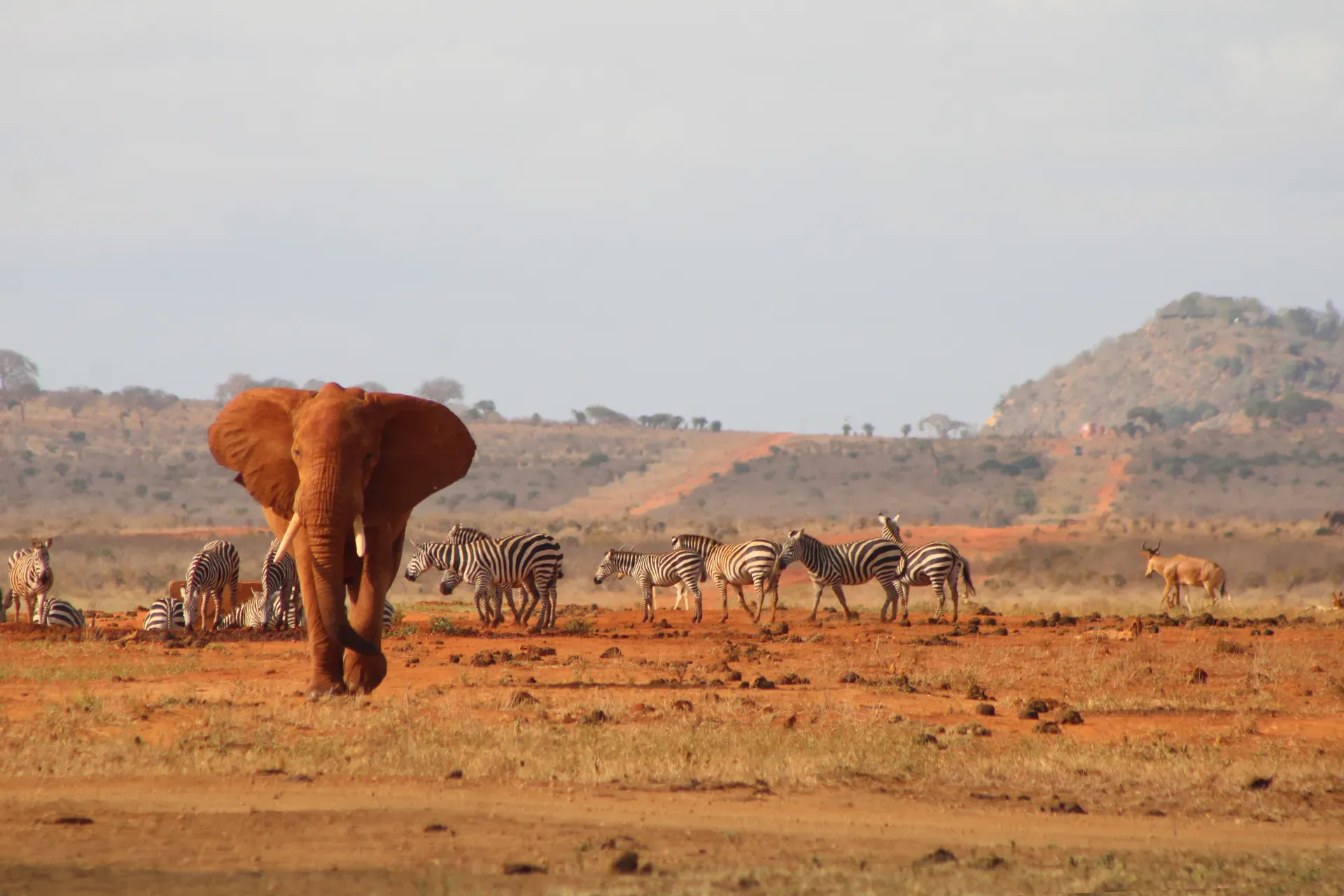
Tsavo East is where Kenya stores its elephant herds: roughly 12,000 of them, all dyed rust-red by the park's soil. Alongside them live maneless lions, Nile crocodiles the length of a canoe, and the last population of the world's rarest antelope. The park covers 13,747 km² of semi-arid plains between Nairobi and the coast — bigger than some countries, and so open that you can often watch a lion from a kilometre away.
That size cuts both ways. Animals here are spread across a huge area, so sightings depend on season, time of day and knowing which waterhole to sit beside — a different game from the fenced, crowded reserves elsewhere in East Africa. This guide gives you the honest odds for each animal, the specific spots inside the park where each one gathers, and the rules that shape how you can watch them. If you're still weighing it up, start with our guide to planning a Tsavo East safari.
What Animals Live in Tsavo East National Park?
Elephants, lions, buffalo, leopards, hippos, Nile crocodiles, Masai giraffes, plains zebras, cheetahs, gerenuk, fringe-eared oryx, lesser kudu and the critically endangered hirola — that's the headline cast, and most of it is visible on a two-day visit. The park opened in April 1948 as one of Kenya's first national parks and now holds more than 60 mammal species and over 500 bird species.
- Elephants: ~12,000, the park's signature animal
- Lions: maneless, the most-seen big cat
- Hippos and Nile crocodiles: Galana River
- Giraffes, zebras, impala, warthog: near-guaranteed
- Dry-country antelope: gerenuk, oryx, lesser kudu
- Hirola: world's rarest antelope, under 500 left
The habitat explains what you'll see and how. This is the former Taru Desert — flat, semi-arid grassland and scrub crossed by the emerald Galana River and shadowed by the Yatta Plateau, a 290 km lava flow that KWS describes as the world's longest. With little tree cover, animals are easier to spot at distance than in greener Kenyan parks, but they're also thinly scattered, so patience and binoculars matter more than luck.
One correction worth making early: plenty of articles about Tsavo East describe rhino sanctuaries and underwater hippo-viewing chambers. Both belong to Tsavo West, the hillier, greener sister park next door. The two share an ecosystem but sell separate tickets, and the animals behave differently in each.
The Big Five in Tsavo East: How Likely Are You to See Each One?
Yes, all five are on the park's list — but the honest version is four likely and one effectively out of reach. Here's the realistic breakdown, using the sighting ratings that specialist wildlife reviewers assign to the park.
| Animal | Your odds | Where to look |
|---|---|---|
| Elephant | Abundant | Aruba Dam, Galana River, Mudanda Rock |
| Buffalo | Common | Permanent water, especially Aruba Dam |
| Lion | Occasional | Open plains; resting under acacias at midday |
| Leopard | Rare | Riverine bush at dawn and dusk |
| Black rhino | Very rare to none | Ngulia Rhino Sanctuary — in Tsavo West |
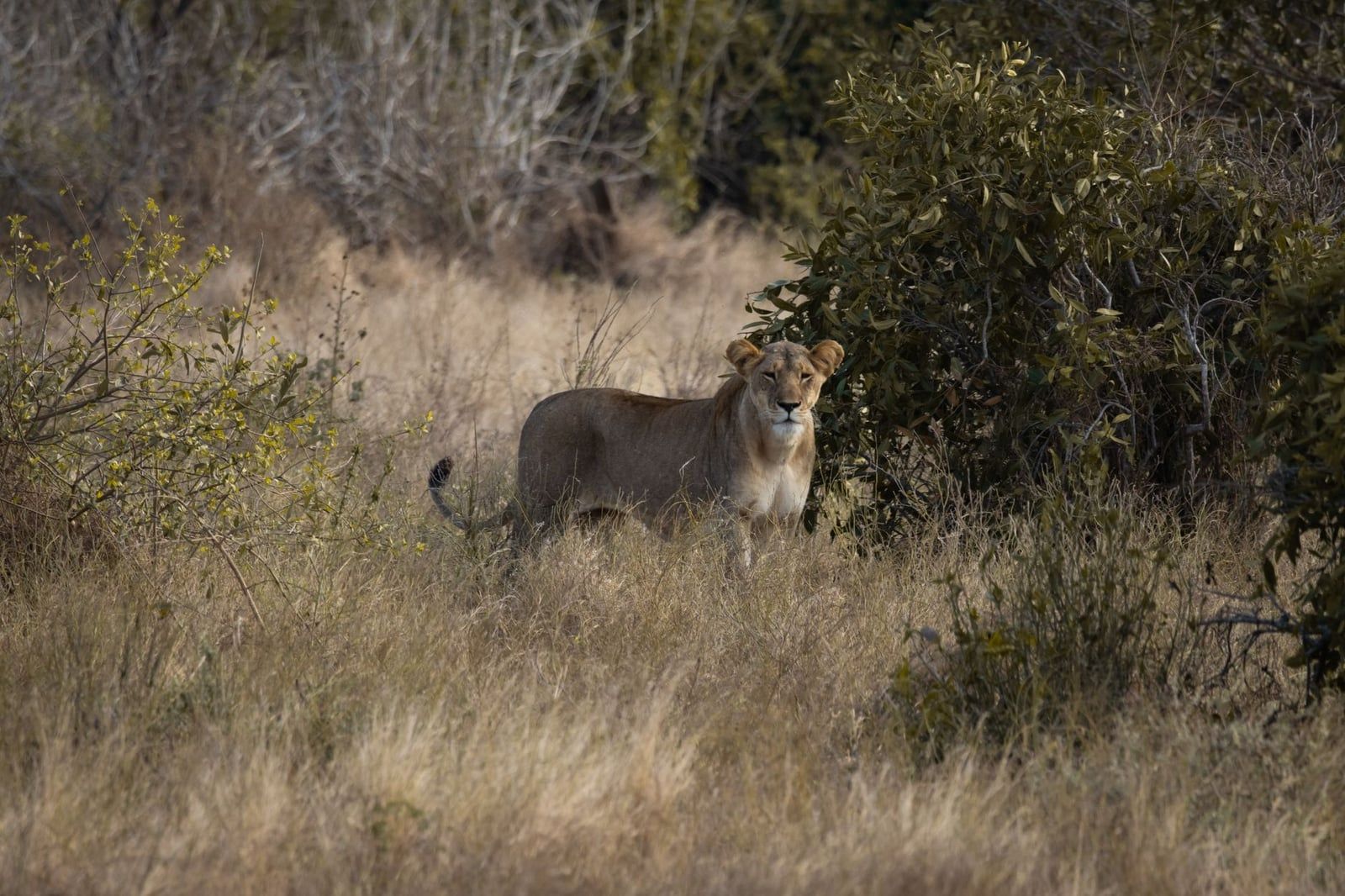
Elephants you will see. Buffalo herds gather near permanent water and are hard to miss. Lions are the park's most easily spotted big cat — prides flop in the shade of acacias through the midday heat, and the flat terrain means a resting pride is visible from far off. Leopards are a genuine prize: solitary, nocturnal-leaning and tied to thick bush along the rivers, they reward the 6:00 AM gate opening more than any other animal.
The rhino needs spelling out, because it's the single biggest expectation gap in Tsavo travel content. Poaching nearly emptied the ecosystem of black rhino in the 1970s and 80s. The surviving, reintroduced population lives inside the fenced, roughly 90 km² Ngulia Rhino Sanctuary — in Tsavo West. If a Big Five set is your goal, the practical move is a combined itinerary, and tours pairing Tsavo East with Tsavo West exist for exactly that reason.
What Tsavo East gives up in rhino it gains in visibility. The open, flat savannah makes every sighting easier than in Tsavo West's broken, wooded volcanic terrain — when an elephant herd is crossing the plains here, there's nothing to hide behind.
The Red Elephants of Tsavo East
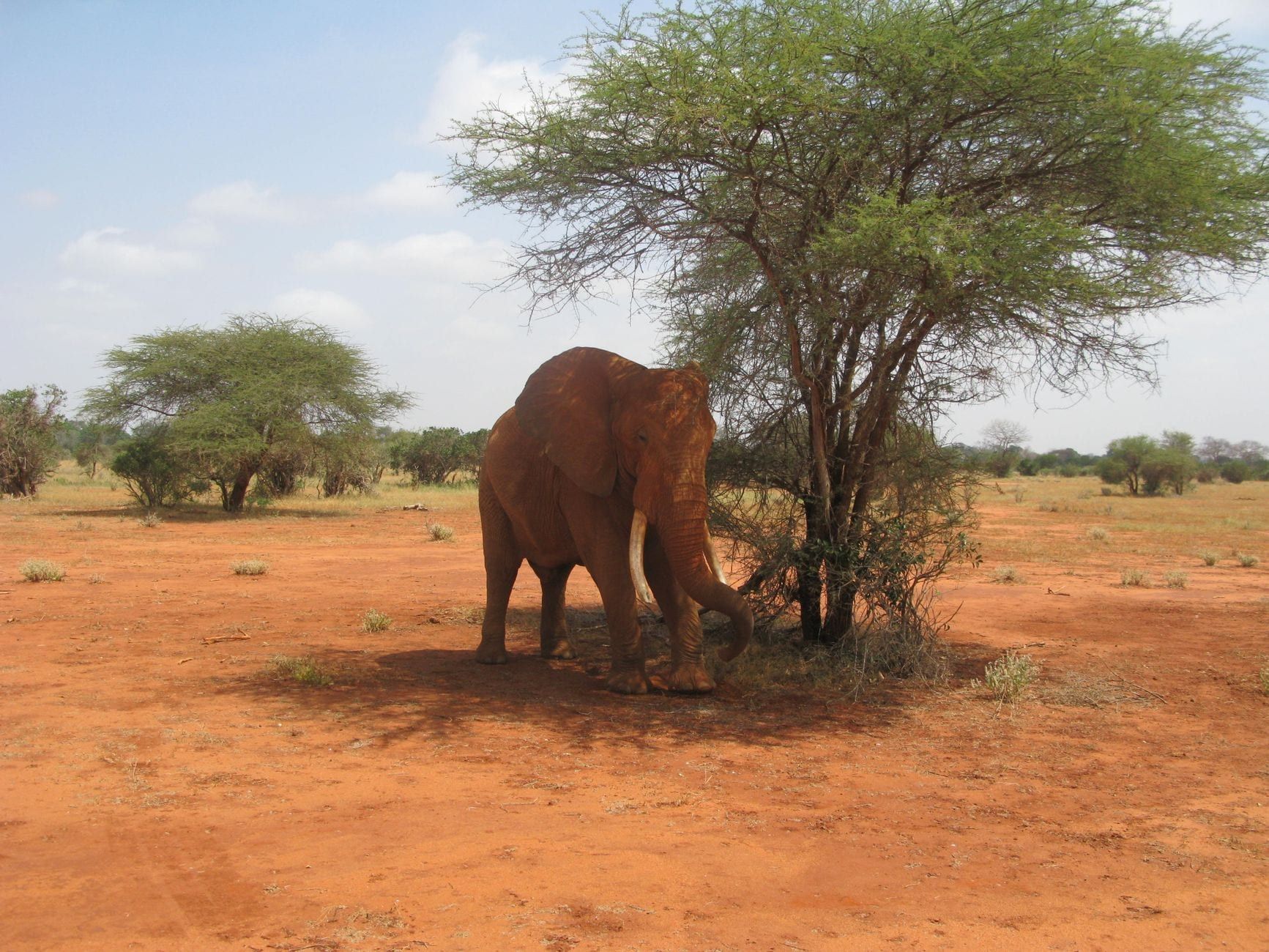
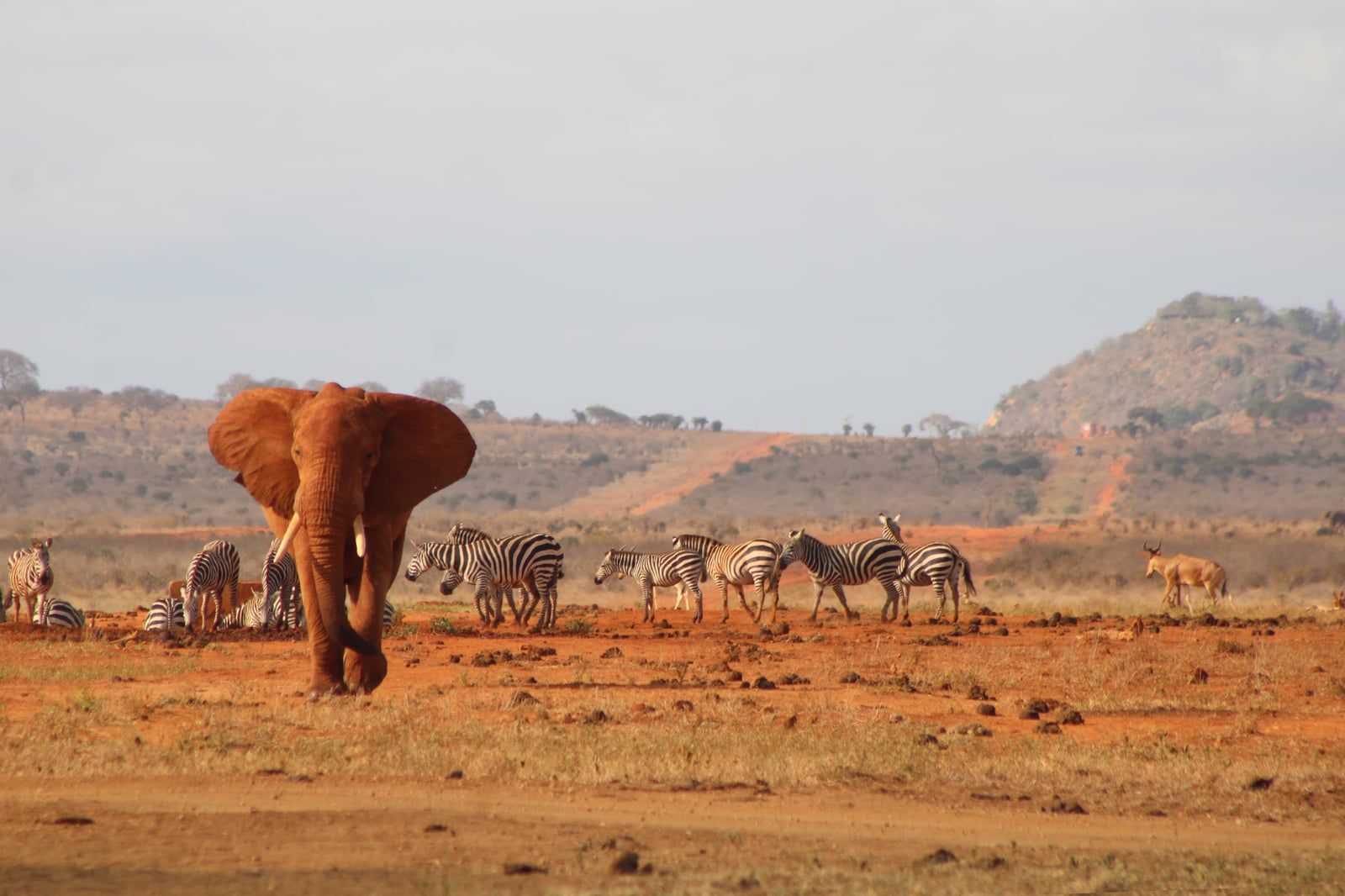
The red colour is a coating, not a species. Tsavo's elephants are ordinary African savannah elephants that dust-bathe in the park's iron-rich red soil until their grey hides turn rust-orange. The dust isn't decoration either: it absorbs skin oils, and it stuns the biting insects that torment elephants through the dry season, which they then brush off by rolling in grass or rubbing against brush. Newly washed elephants look grey; a few days later they're red again.
The numbers are the reason Tsavo East is on the map for elephant-watchers. The park holds more than 12,000 elephants, and a 2021 aerial census put the wider Tsavo Conservation Area at around 14,000 — Kenya's largest single elephant population, with roughly half of the ecosystem's counted elephants inside Tsavo East itself. Family herds of twenty or more moving together across the plains are a normal sight, not a lucky one.
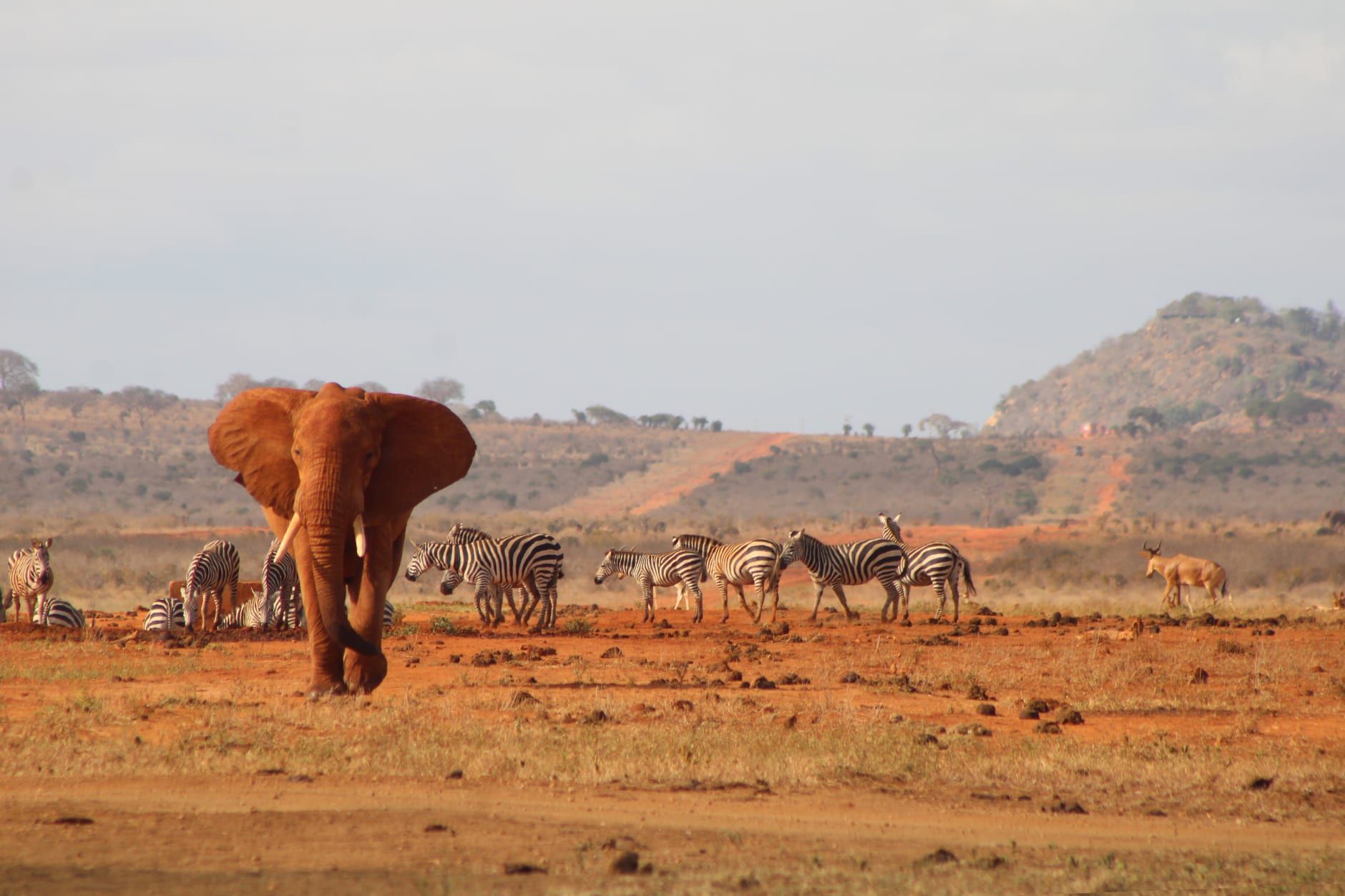
Where to find them depends on the season, because water dictates everything here. In the dry months (June–October, January–February), herds concentrate at Aruba Dam's reservoir, along the Galana River banks, and at the natural waterhole below Mudanda Rock — a 1.6 km inselberg that catches rainfall and funnels it into the dam, where hundreds of elephants come to drink. You can climb the rock and watch the herds below. Photographers should work the plains along the Yatta Plateau edge in early or late light: red herds against the pale, dry grass and the dark lava escarpment behind them is the park's classic frame.
Big Cats and Other Predators of Tsavo East
Predators are the reason to be at the gate for the 6:00 AM opening: this is a park where the cats hunt across open ground and sleep through the 31°C midday. Lions rate Occasional, cheetahs are possible on the plains, leopards are Rare, and the smaller hunters — hyenas, jackals, foxes — fill the hours between. The lion story here is unlike anywhere else in Africa.
Maneless lions
Many adult males here grow little or no mane at all, probably an adaptation to the region's heat and thorny scrub — a full mane is a thermal and thorn-trap liability in this country. The look is startling if you know lions from elsewhere. These are also the descendants of notorious animals: in 1898, two maneless males killed dozens of Uganda Railway workers at Tsavo before Lieutenant-Colonel John Henry Patterson shot them both; their mounted remains have been at Chicago's Field Museum since 1925, and early accounts blamed them for well over 100 deaths, though later research put the figure near 35. Today's lions are ordinary wild lions — a danger to nothing but the park's grazers. The flat terrain works in your favour: a pride resting under an acacia sticks out from a distance.
Cheetah and leopard
Cheetahs suit this park perfectly — the long, flat plains are sprinting country, and they're your best-cheetah-odds habitat in the Tsavo ecosystem. Scan termite mounds and fallen trees, the raised points they use as lookouts. Leopards are the opposite: rated Rare, solitary, and hunting mostly at night. Your window is the first and last hour of daylight along the Galana's wooded banks, and even then a sighting is a bonus rather than a plan.
Hyenas, jackals and wild dogs
Spotted hyenas are Occasional and widely misunderstood — in Tsavo they're skilled hunters in their own right, not just scavengers, and their whooping at dusk around camps is part of the park's soundtrack. Black-backed jackals trot the plains in pairs, and bat-eared foxes dig for termites on the open ground. African wild dogs are classed Very Rare: a handful of packs move through the ecosystem at low density, and encountering one is a stroke of timing you can't engineer.
Timing rule for all predators: book the dawn and late-afternoon drives. Gates open at 6:00 AM and close at 6:00 PM, and nocturnal hunting means cats sleep through the midday heat. The 6:00 AM start isn't a formality — it's when the night's hunters are still visible.
Hippos, Crocodiles and Life on the Galana River
In a semi-arid park, water is the whole strategy: find the permanent water and you find the animals. The Tsavo and Athi rivers join inside the park to form the Galana, whose permanent flow is the reason hippos and crocodiles live in a place that averages 31°C at midday.
Aruba Dam, built in 1952 across the Voi River, is the easiest concentration point. Its reservoir pulls elephants, buffalo and the full range of grazers, plus waterbirds — herons, storks and the plovers that work the mud. In the dry season this is the single most productive spot in the southern park, and it sits within easy reach of the Bachuma and Voi gates.
The Galana itself holds the big reptiles. Nile crocodiles laze along the banks, and the Lugard Falls stretch — where the river funnels through polished, water-worn rock in a series of rapids — is a favourite spot for both crocs and the birds that fish the churning pools. Hippos surface in the deeper pools upstream. Reptile fans can also look for monitor lizards, tortoises and the park's snakes; note that exploring the falls area means walking over uneven rock, one of the few times you'll leave the vehicle in a designated area. And to repeat the earlier correction: the famous underwater hippo-viewing chamber is at Mzima Springs, in Tsavo West — not here.
Giraffes, Zebras and the Grazers of the Open Plains
The bread-and-butter sightings come almost free: Masai giraffe, plains zebra, impala, waterbuck, warthog and Coke's hartebeest are all Common, and on a normal day you'll pass groups of each without trying. Bushbuck hold the riverine thickets; eland, the largest antelope, move through in loose herds. These are the animals that fill the hours between the elephant herds and the predator hunts.
The dry-country specialists are what set Tsavo East apart from Kenya's greener parks. The gerenuk — the one that stands on its hind legs to browse sparse foliage, propped on its long neck like a ruminant on tiptoe — is the signature sighting. Add the fringe-eared oryx with its rapier horns, the shy lesser kudu of the scrub, and the tiny dik-dik in monogamous pairs along every track. These animals evolved for exactly this arid bush, and Tsavo East is one of the most accessible places in East Africa to see all of them in one park.
Primates are limited to yellow baboons and vervet monkeys, mostly around the rivers and camps. The small nocturnal cast — bushbabies, genets, African civets, porcupines, aardvarks — is real but largely invisible, because night drives are not conducted inside the national park itself. To see them you need a night drive in one of the adjacent conservancies, which some lodges arrange. Don't book Tsavo East expecting nocturnal safaris; the park's viewing day runs 6:00 AM to 6:00 PM.
Rare and Endangered Animals of Tsavo East
The park's rarest resident is the hirola, also called Hunter's hartebeest — widely described as the world's most endangered antelope, with fewer than 500 individuals left in the wild. Its natural range is across the border in Somalia and eastern Kenya, and in the 1990s a protected population was translocated into Tsavo East as an insurance against extinction. Seeing one is genuinely difficult: they live in the remote far east of the park, a long, dusty drive from the main southern circuit. For rare-species hunters, that's the trade — a real chance at the world's rarest antelope, in exchange for a day of the park's least travelled tracks.
Two other rarities rank just below it. Grevy's zebra, the tall, narrow-striped species, occur here in small numbers among the far more common plains zebra — check any zebra group's stripe pattern and belly. African wild dogs, endangered and wide-ranging, pass through at very low density; a sighting is luck, not planning.
The conservation machinery behind the animals is visible too. The Kenya Wildlife Service manages the park, and the Tsavo Trust runs anti-poaching and monitoring work across the ecosystem. The Sheldrick Wildlife Trust operates two reintegration units here — Voi and Ithumba — where rescued orphaned elephants are raised and gradually merged into wild herds. Guests staying at the Trust's Ithumba and Galdessa eco-lodges can visit; Ithumba, in the quiet north, is one of the more moving experiences in Kenyan wildlife tourism.
Birdlife: One of Africa's Top Birding Parks
More than 500 bird species have been recorded here, and the Kenya Wildlife Service announced that a global study named Tsavo East Africa's top birdwatching destination. That's not a tourism-board flourish — the dry-country specialities draw birders who plan entire trips around them.
The headliners: the Somali ostrich, whose legs turn blue in the breeding season; the vulturine guineafowl, moving in flocks of exquisite blue-and-white feathered bodies and bald red heads; the golden-breasted starling, arguably the most beautiful bird on the continent; and the kori bustard, one of the world's heaviest flying birds, strutting the plains. Raptors include martial eagles and secretary birds stalking the grass on foot, while lilac-breasted rollers — Kenya's most photographed bird — sit on every other bush. Along the Galana and around Aruba Dam, expect kingfishers, herons, storks and a full cast of wetland species.
Timing differs from the mammal calendar. November to May brings the seasonal migrants and the highest species counts, so birders should travel in the green months that mammal-watchers avoid. June to October remains the mammal peak. A birder with a free January might get the best of both — the tail of migration before the vegetation fully dries out.
When and Where to See Animals in Tsavo East (and the Park Rules)
June to October is the best wildlife window: rainfall is minimal, vegetation thins out, and animals concentrate around predictable water — the Galana, Aruba Dam and Mudanda Rock's natural catchment. The January–February dry spell delivers the same effect. Avoid April, the wettest month, when tracks turn to mud and animals scatter across the fresh grass, and treat November, the short-rain peak, the same way. Daytime temperatures in the dry season run about 20–32°C, cool enough at dawn that you'll want a fleece for the 6:00 AM start.
Game drives are the viewing method here — the park is far too big for anything else — and the cheat sheet below maps the named spots to the animals each one delivers.
| Location | What you'll see | Best conditions |
|---|---|---|
| Aruba Dam | Elephant and buffalo herds, waterbirds | Dry season, dawn and dusk |
| Galana River & Lugard Falls | Hippos, Nile crocodiles, riverine birds | Year-round; cooler hours |
| Mudanda Rock | Drinking herds viewed from the rock | Dry season |
| Open plains | Cheetah, lion, zebra, oryx, ostrich | Early morning |
The official KWS rules shape your day more than you might expect. Gates open at 6:00 AM and close at 6:00 PM unless you're staying overnight inside the park. You must remain in your vehicle except in designated areas, keep at least 20 m from wildlife, and move slowly and quietly — startled animals react dangerously, and the 40 km/h speed limit is enforced. Off-road driving and night driving are both prohibited, and single-use plastics are banned. Full details on costs and timing are in our park hours and entry fees guide.
Entry costs USD 80 per non-resident adult per 24 hours under the current KWS tariff, with children aged 3–17 paying half and vehicle entry billed separately — check the official KWS fee schedule shortly before travel, since the tariff is recent and has faced legal challenges. How many days? Plan 2–4. One long day from the coast covers Aruba Dam, Mudanda Rock and the Galana, but a minimum of two days — morning and afternoon drives — is what improves your odds on the predators. Most coastal visitors do exactly that on safaris from Mombasa, since Bachuma Gate is just 110 km from the city; the full range of options, including longer itineraries, is on our Tsavo East tours page.
Frequently asked questions
Can you see the Big Five in Tsavo East National Park?
On paper, yes — elephant (abundant), buffalo (common), lion (occasional) and leopard (rare) are all present. But black rhino are effectively absent from Tsavo East: the reintroduced population lives in the fenced Ngulia Rhino Sanctuary in Tsavo West. For a genuine Big Five set, combine the two parks.
Why are the elephants in Tsavo East red?
They're the same species as any other African savannah elephant. The rust colour comes from dust-bathing in the park's iron-rich red soil, which also absorbs skin oils and stuns biting insects. Tsavo East holds roughly 12,000 elephants, part of the ~14,000-strong Tsavo Conservation Area population counted in the 2021 census — Kenya's largest.
Why do Tsavo lions have no manes?
Many adult males grow little or no mane, likely an adaptation to the region's heat and thorny scrub. Tsavo's lions are also famous as the descendants of the 1898 'Man-Eaters of Tsavo', two maneless males that killed dozens of Uganda Railway workers before being shot by Lieutenant-Colonel John Henry Patterson.
What is the best time of year to see animals in Tsavo East?
June to October, when thin vegetation and shrinking water push animals to the Galana River, Aruba Dam and Mudanda Rock. The January–February dry spell is also strong. Dawn and dusk drives are when predators are most active — gates open at 6:00 AM, so take the early start.
What is the rarest animal to see in Tsavo East?
The hirola (Hunter's hartebeest), the world's most endangered antelope with fewer than 500 left in the wild. A protected population was translocated into the park in the 1990s and lives in the remote far east. Grevy's zebra and African wild dog are the other very rare sightings.
Is Tsavo East good for birdwatching?
Exceptionally so — over 500 recorded species, and the Kenya Wildlife Service reports a global study named it Africa's top birdwatching destination. Dry-country specials include the Somali ostrich, golden-breasted starling and vulturine guineafowl; November to May adds migratory species.
How many days do you need in Tsavo East to see animals?
Plan 2–4 days. One day covers the main southern viewing areas — Aruba Dam, Mudanda Rock, the Galana — but two days minimum gives you more dawn and dusk drives, which is what lifts your predator odds.
What are the rules for viewing animals in Tsavo East?
KWS rules: gates open 6:00 AM and close 6:00 PM, stay in your vehicle except in designated areas, keep 20 m from wildlife, drive below 40 km/h, and move slowly and quietly so animals aren't startled. Night driving and off-road driving are prohibited inside the park.